Maryland State Police
Maryland State Police
The Maryland Commissioner of Motor Vehicles was founded in 1910. The Commissioner himself, was able to appoint assistants to aid in enforcing state traffic laws. Late 1914 saw the introduction of Motorcycle Deputies to further the mandate of traffic law enforcement on state roads. After World War I, the need for statewide enforcement of criminal law became critical as the proliferation of the motor car became significant, and general lawlessness throughout the state was in need of broad control. The Governor of the state, the Police Commissioner of Baltimore City, and the Commissioner of Motor Vehicles came up with a plan for a State Police Force under the Commissioner of Motor Vehicles. Former servicemen were recruited and the first training camp was conducted early in 1921.
By 1922, the force of motorcycle deputies had statewide jurisdiction over criminal cases through deputization by the county sheriffs. The force was supported by a plainclothes investigative department and was known as the State Police Force.
In 1935, the Maryland State Police was established as a separate unit of state government. 54 new officers were sworn in. The new agency was funded out of revenues from the Department of Commissioner of Motor Vehicles. It was granted additional statewide police powers to enforce fish, oyster, game and other conservation laws and maintain a training school.
In 1960, the MSP Aviation Division commenced operation with one helicopter. A 10 man Dive Team was also formed that year.
In 1961, a K-9 Team was implemented, and is one of the oldest and continuous Dog Handler programs of any state police agency in the U.S. The Maryland State Police were made part of the Department of Public Safety and Correctional Services in 1970. Shortly thereafter, in a cost saving and safety initiative, the MSP did away with the distinctive black and deep green patrol cars in favor of yellow color scheme. The old color scheme had been in use since the first days in 1935 and was missed by many a Trooper!
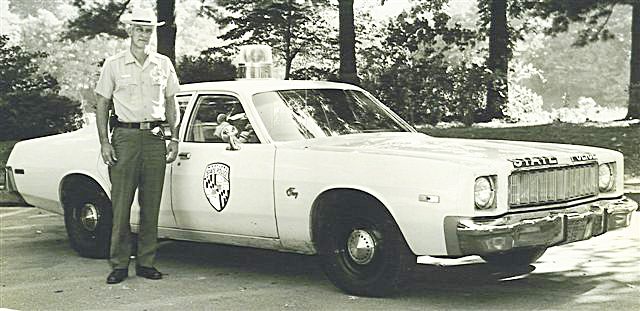
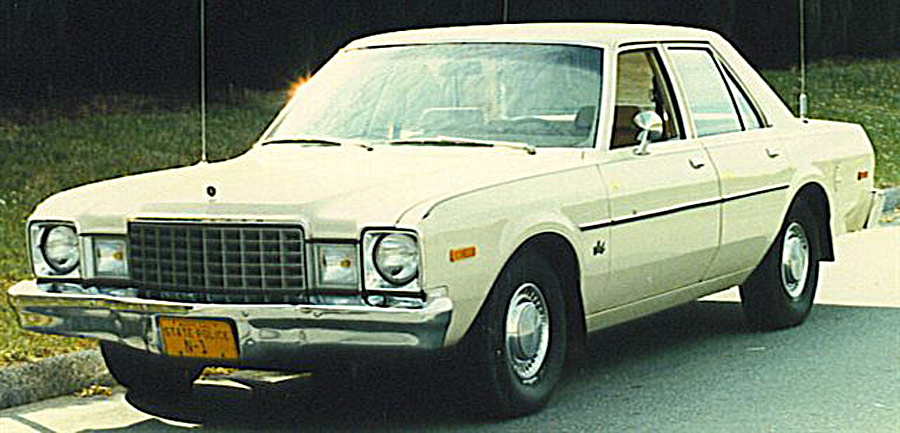
In 1978, the Special Tactical Assault Element Team was formed. In 1984, the yellow MSP patrol vehicles were replaced by a tan color scheme with a brown and black stripe. That same year, rooftop bubble lights were replaced by red and blue light bars. Around this same time, MSP reintroduced the use of patrol motorcycles after a 35 year absence.
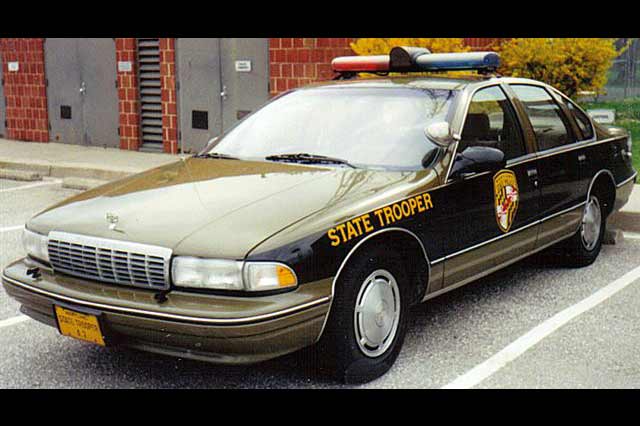
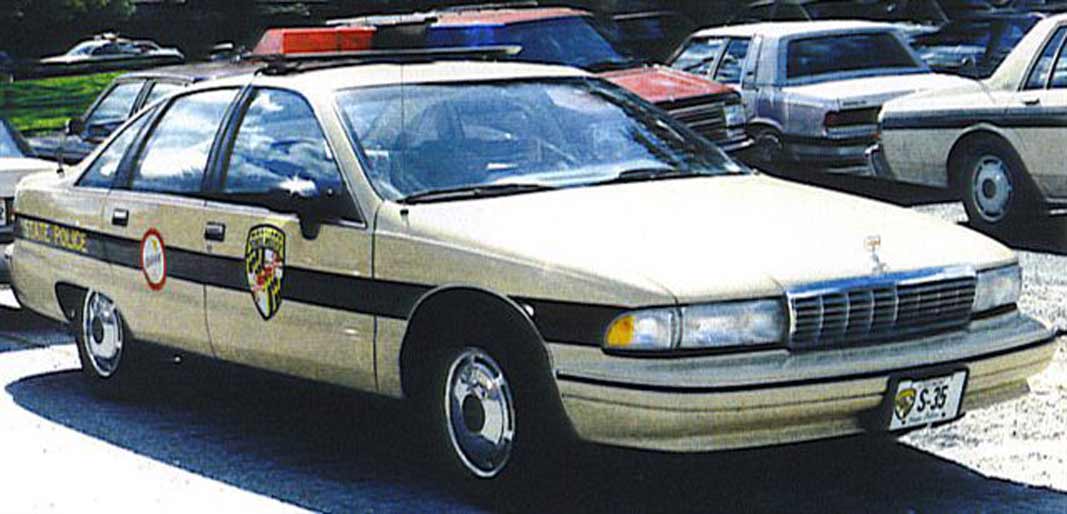
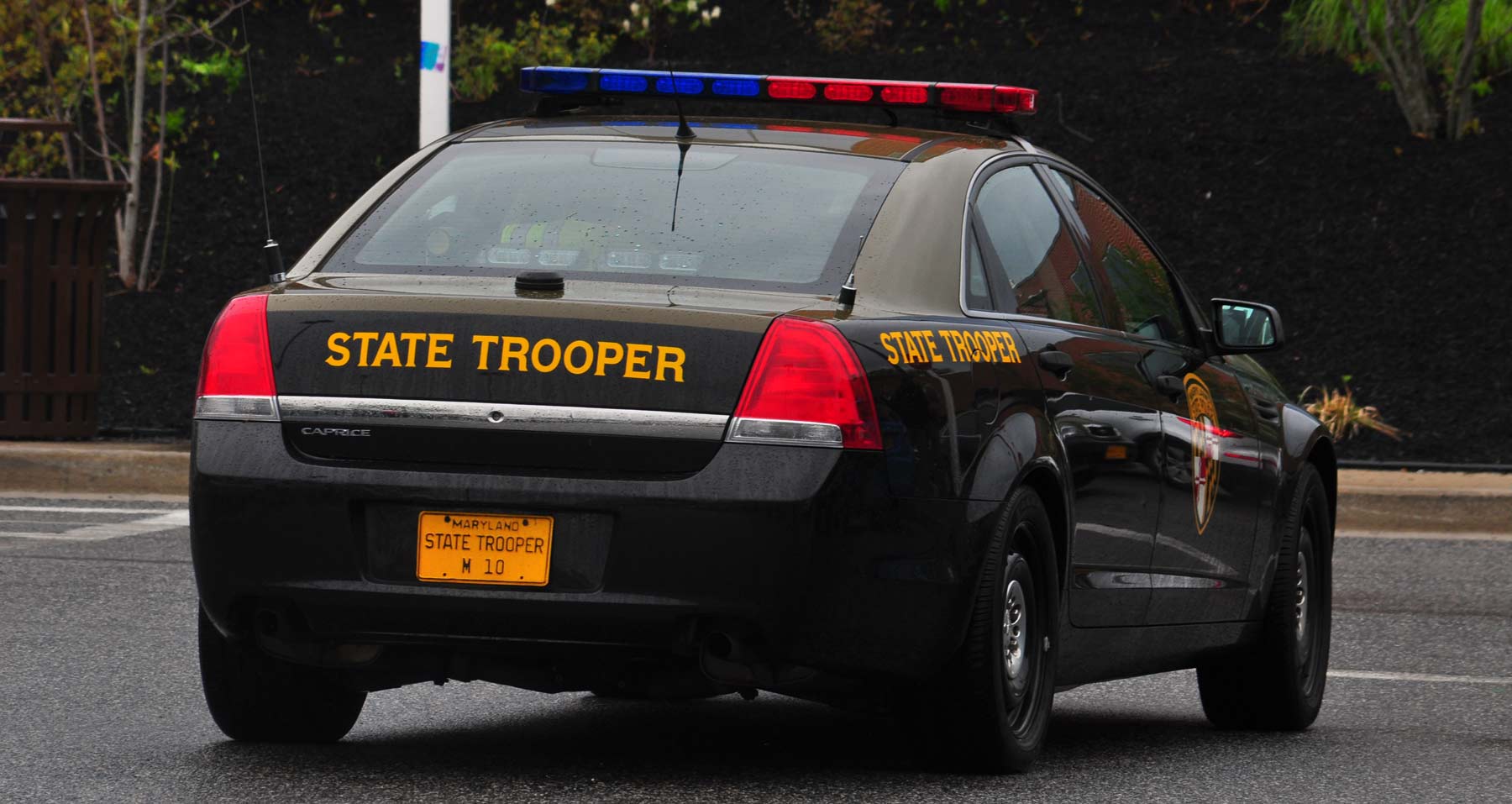
In 1994, the Department of Maryland State Police was formed as a principal executive department. It was renamed the Department of State Police in 1995. It was in that year that the MSP went back to the black and deep green color scheme for it's patrol vehicles. The Department of State Police enforces state motor vehicle and criminal laws and safeguards the lives and safety of all persons within the State. The Department protects property and assists all persons to secure the equal protection of law. The Department also preserves the public peace; detects and prevents crime; and enforces the laws and ordinances of the State and its local subdivisions. It apprehends and arrests criminals and lawbreakers, and preserves order in public places. In addition, the Department maintains the safe, orderly flow of traffic on public streets and highways and cooperates with and assists other law enforcement agencies.
The Department of State Police has statewide jurisdiction except in incorporated municipalities. Within municipalities the Department may exercise jurisdiction under certain conditions, as regulated by statute. The Department also enforces the laws relating to controlled dangerous substances (narcotics) throughout the state with no jurisdictional limitations.
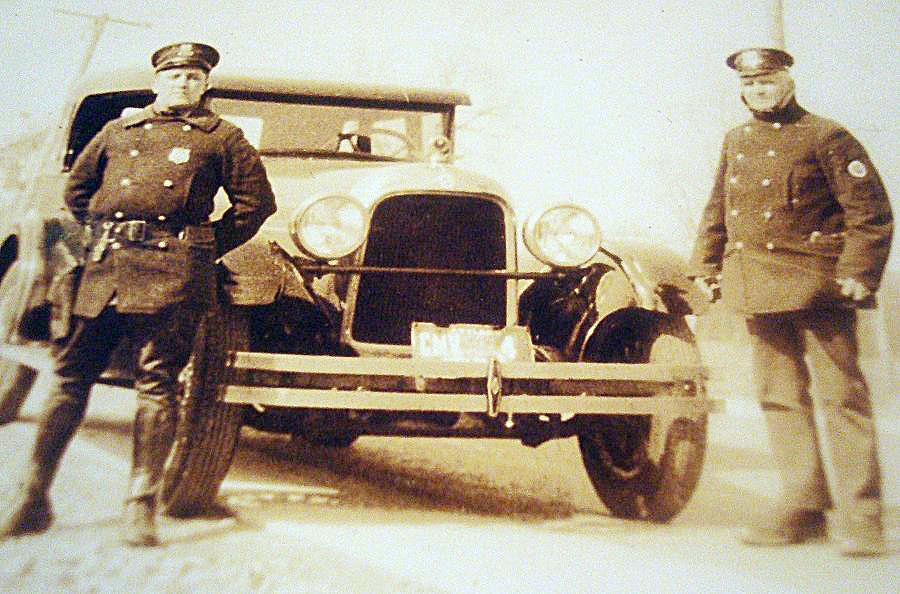
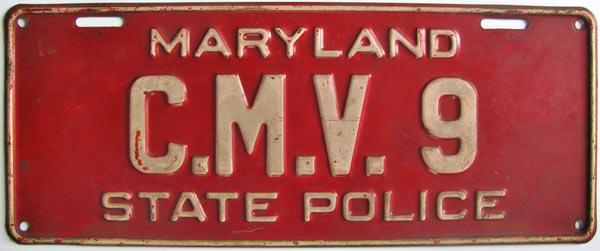 Pre-1935 issue.
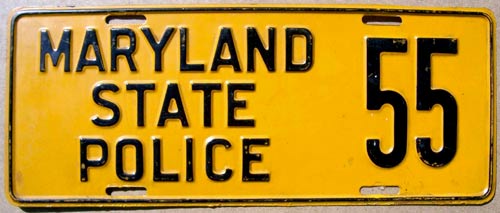
With the formation of the Maryland State Police in 1935, the old red CMV license plates were replaced by a black over mustard yellow and sometimes black over yellow-orange license plate. The older versions had eight mounting holes; four small corner holes and four elongated mounting slots. The title MARYLAND (over) STATE (over) POLICE occupied the left and center portion of the plate and an embossed number up to three digits occupied the right portion of the plate.
Later versions of these plates did-away with the small corner mounting holes. These durable plates were used on all marked patrol vehicles through the 6" x 12' size standardization introduced in 1956. Motorcycle license plates of the MSP will be discussed and showcased further down.
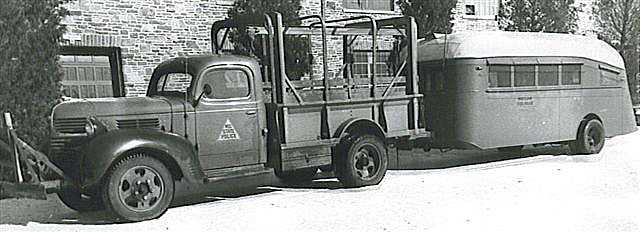
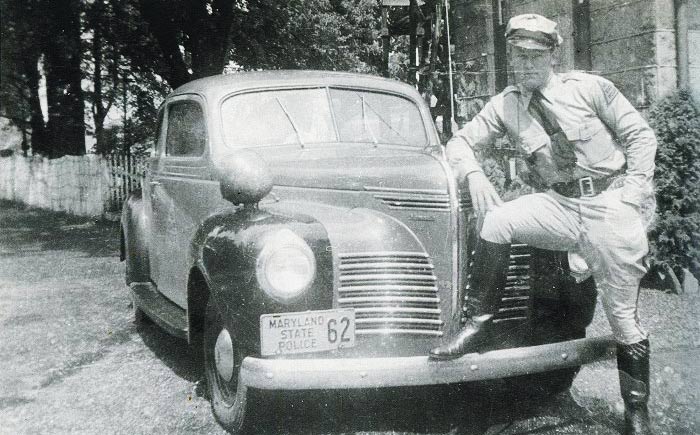
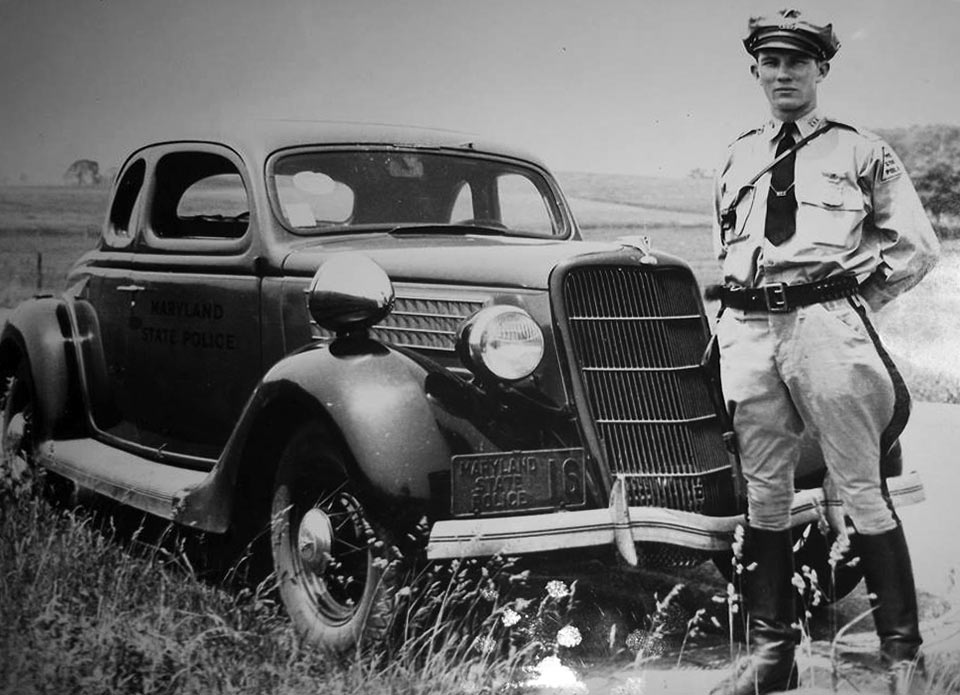 1935 Ford
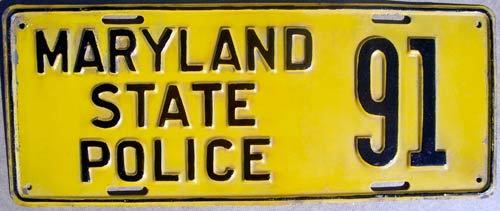 1935-1956 issue. Embossed steel. Approximately 6" x 15". Earlier type with small circular corner mounting holes.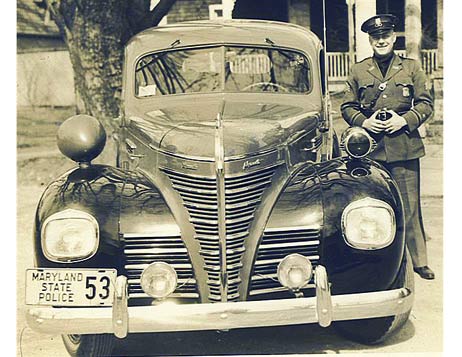
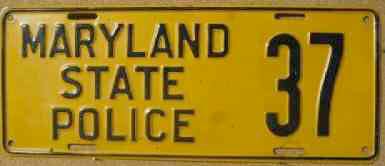 1935-1956 issue. Embossed steel. Approximately 6" x 15". Earlier type with small circular corner mounting holes.
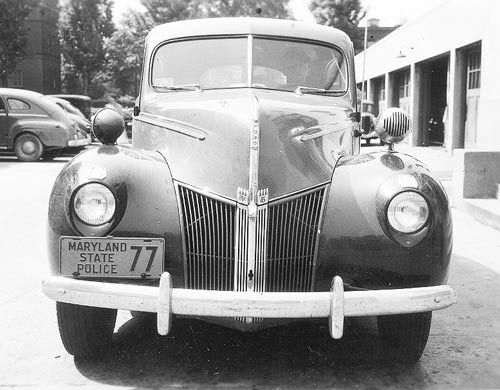 (Courtesy Norman Rhoades)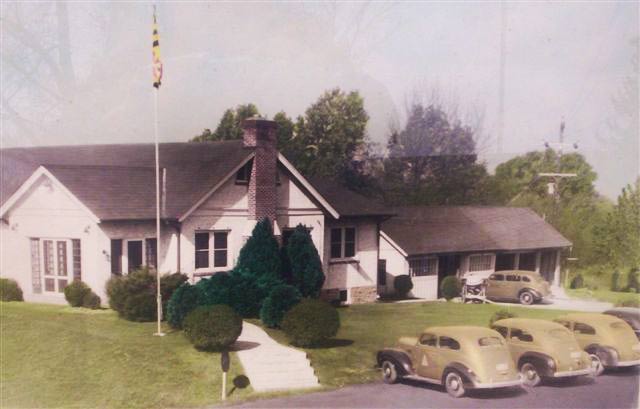
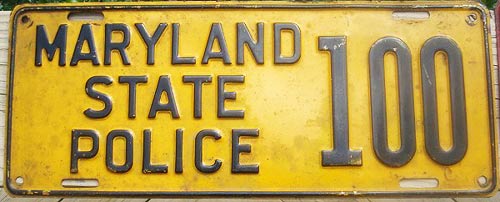 1935-1956 issue. Embossed steel. Approximately 6" x 15".
 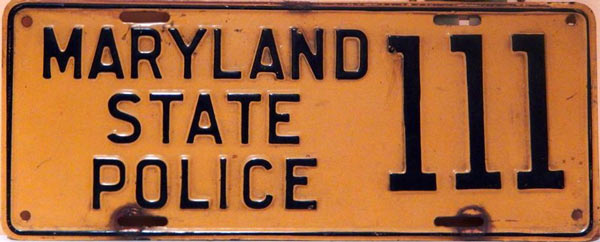 1935-1956 issue. Embossed steel. Approximately 6" x 15".
 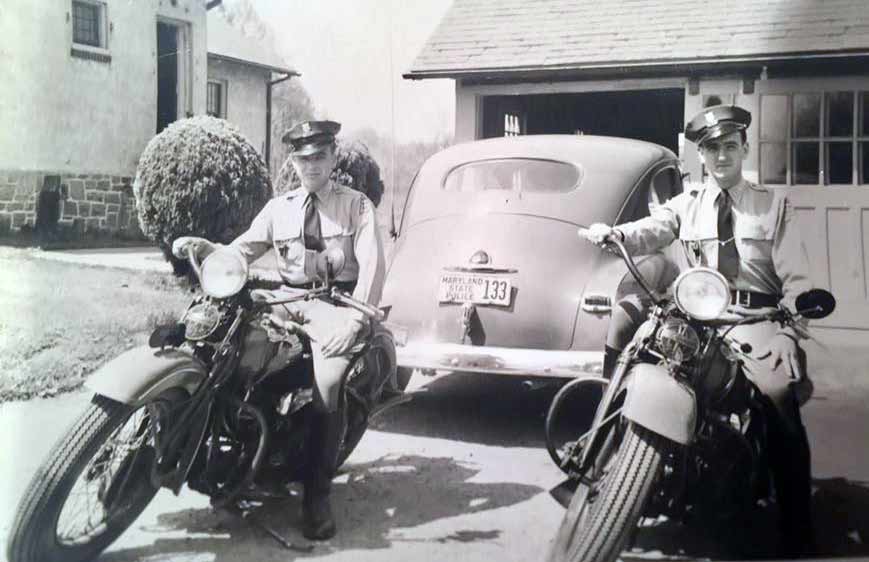 (Courtesy Jerry Scarborough)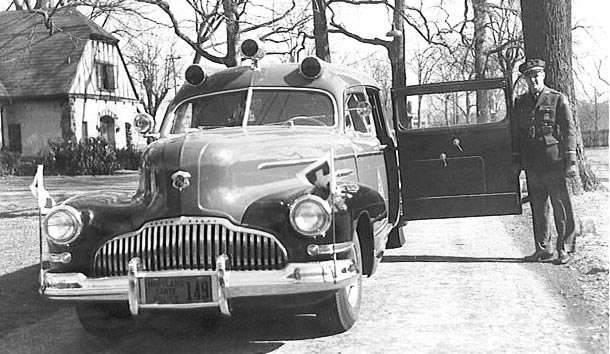
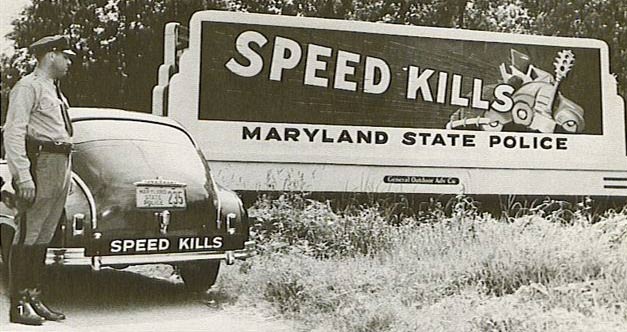
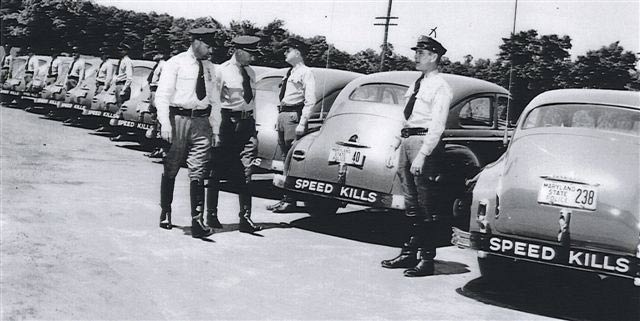
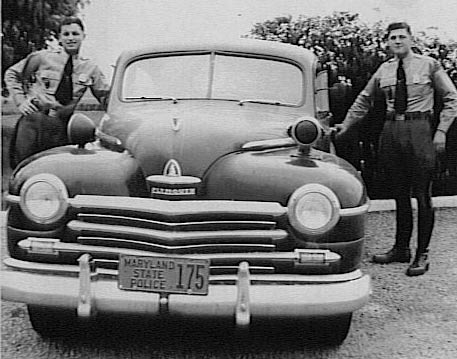
 (Courtesy Andrew James)
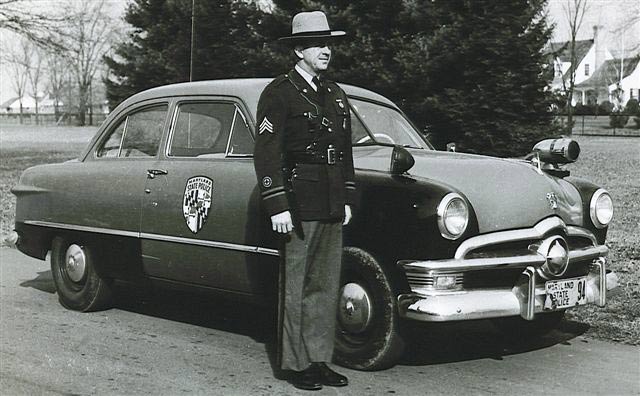
 1935-1956 issue. Embossed steel. Approximately 6" x 15". Later type with no circular corner mounting holes.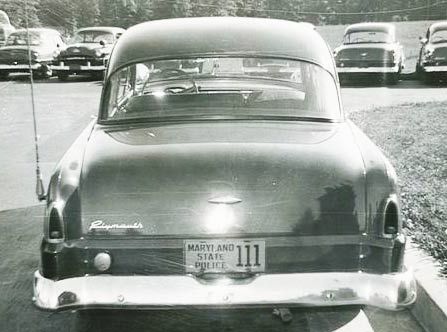
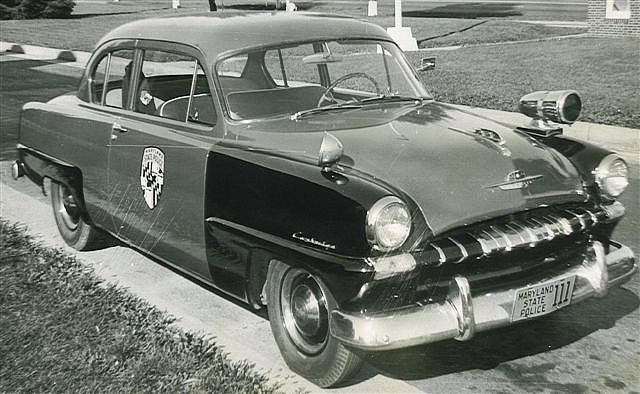
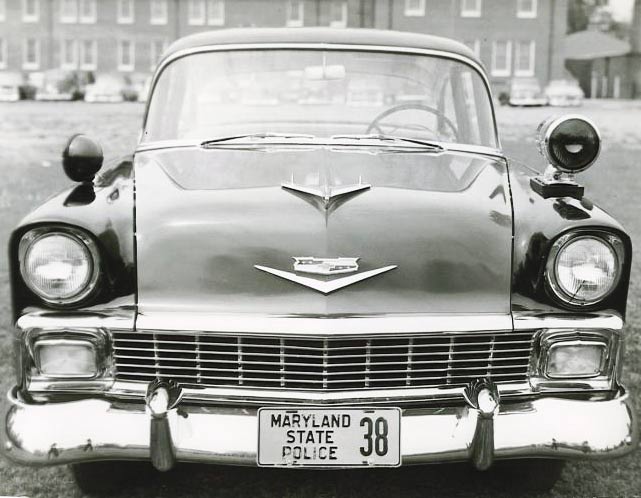
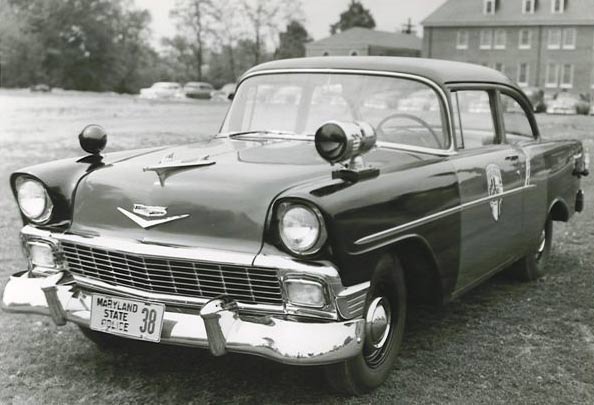 1956 Chevrolet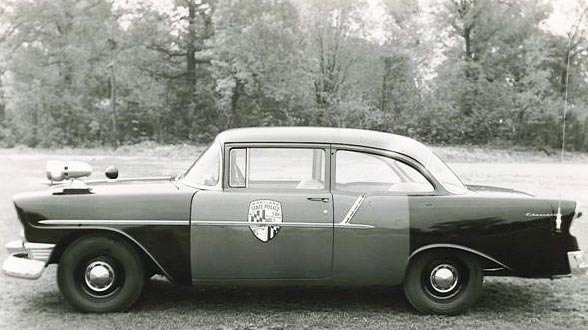
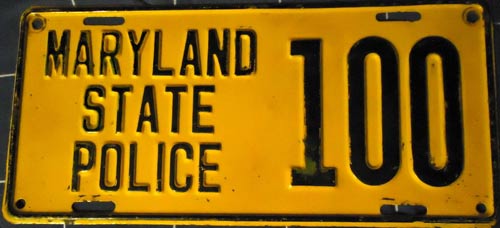 Pre-1956 issue. Embossed steel. Unsure of exact time frame as this smaller version (6" x 13") is not a common type.
 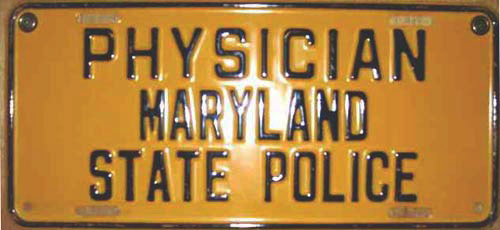 Pre-1956 issue. Embossed steel. Approximately 6" x 13"
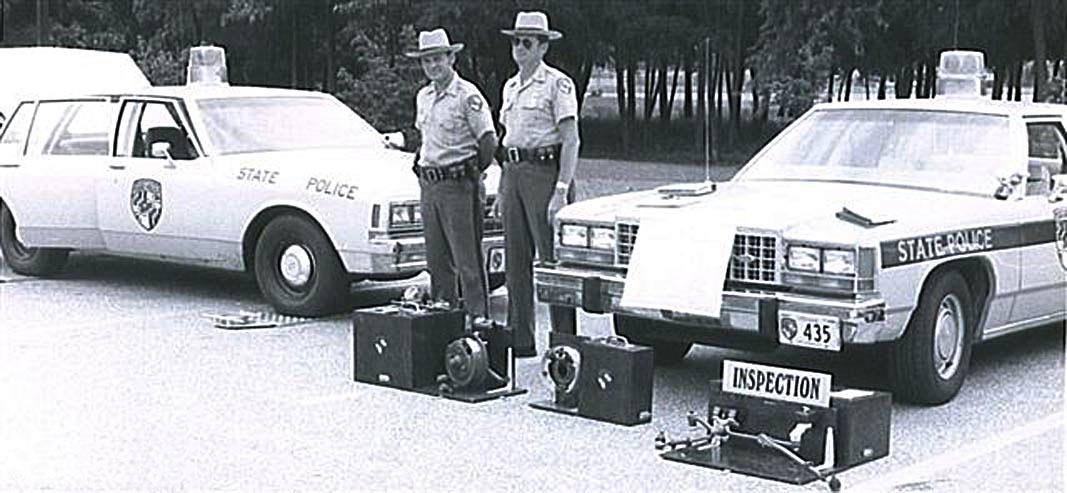
 In 1956, all state and provincial jurisdiction in North America had agreed to a standard size dimension for all car-sized license plates which was 6 inches by 12 inches. Maryland complied with the new standard that year, and license plates of the Maryland State Police followed suit. There were three versions to the new plates which were embossed steel in black over yellow-orange and had two elongated mounting holes on the top of the plate and two on the bottom. Each version had the state name centered between the upper holes and the words STATE (over) POLICE stacked on the left side of the plate.
Here is where the difference in the versions are:
TROOP PLATES: Some of these plates assigned for use by Troops A, B, C, D and E had the word TROOP followed by the Troop letter centered between the lower holes. We have no record of the old Troop letter assignments, so if you could let us know this information, it would be greatly appreciated.
HEADQUARTERS PLATES: These plates were similar to the TROOP plates mentioned above but had the word HDQTRS. embossed between the lower holes.
BLANK BOTTOM PLATES: These plates were the same as the other two versions but with no wording on the lower section of the plate and may have been issued to units assigned to specific duties as opposed to specific locations.
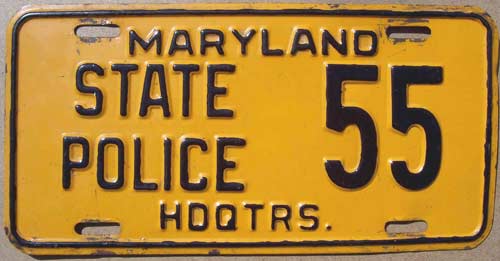 1956-c.1963 issue.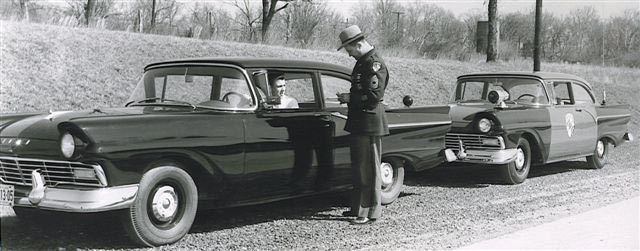
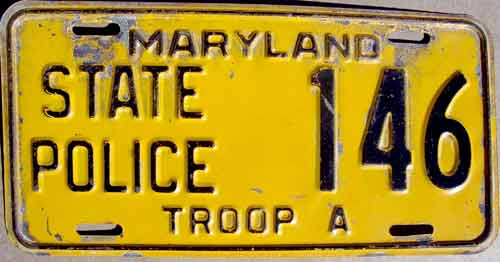 1956-c.1963 issue.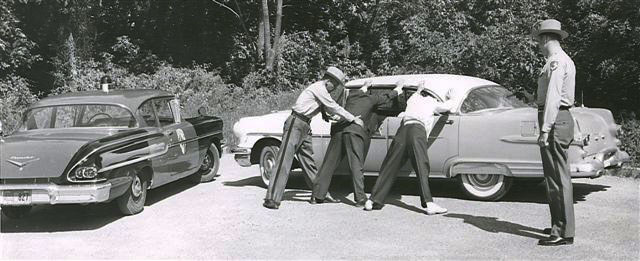
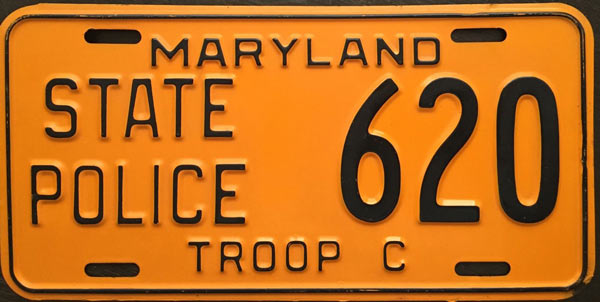 1956-c.1963 issue.
 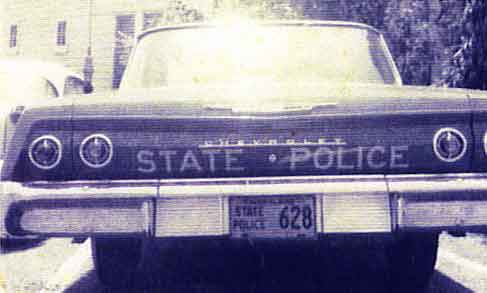 1962 MSP Chevrolet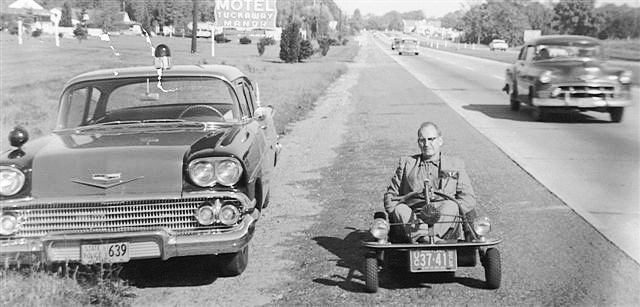
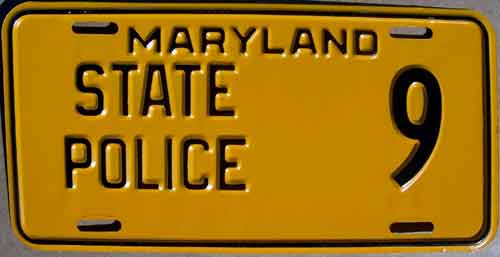 1956-c.1963 issue.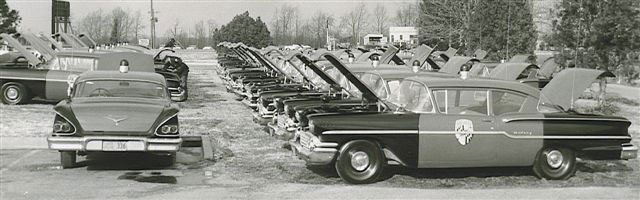
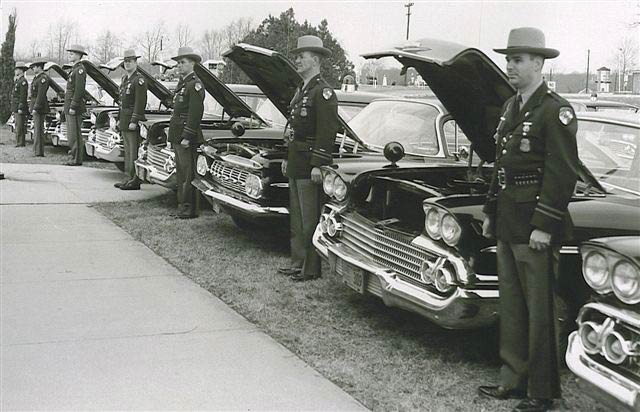
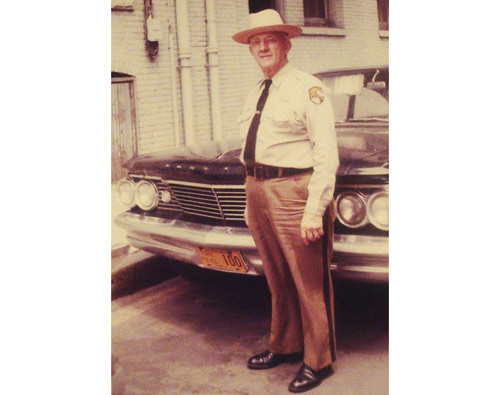
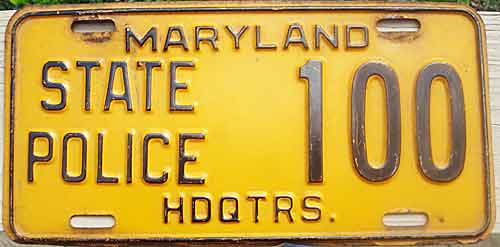 1956-c.1963 issue. Embossed steel. Headquarters version. Issued to and used by MSP/CMV veteran Menasha Katz as seen in photo to the right.
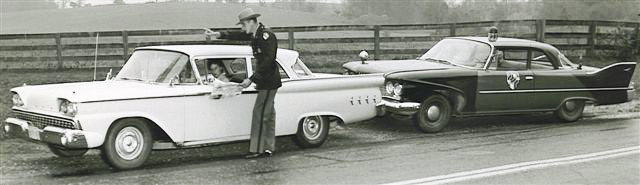
It had been said that in March of 1951, a company specializing in reflective coatings made a proposal to provide the MSP with license plates utilizing reflective material for increased low-light visibility. Samples of these MSP license plates with the reflective coverings were provided to the force. Such samples had been recovered by Retired MSP Sgt. Harold Harbold at MSP headquarters in the early 1980's. It is believed that the reflective sample plates he recovered were proposed after 1956 and before 1963 as they comply with the 1956 size standard as well as the character layout of those plates issued during that time.
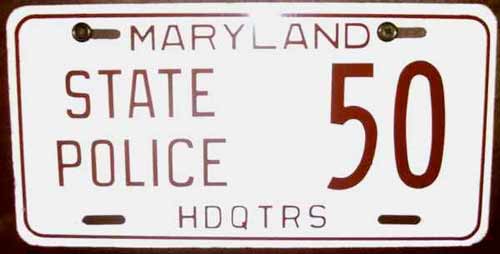 1950's test type. Special prototype to determine feasibility for all-flat and reflective license plates for the MSP.
 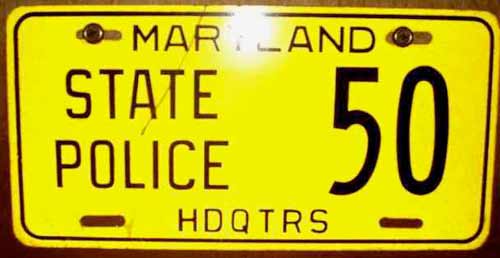 1950's test type. Special prototype to determine feasibility for all-flat and reflective license plates for the MSP.
 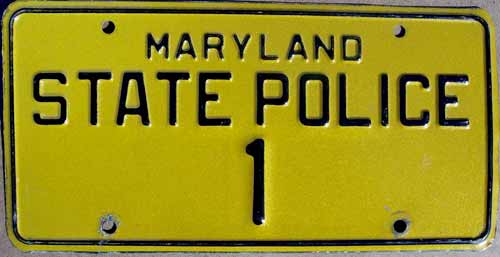 Special reflective version on galvanized steel for Superintendent of MSP. It has been stated by well-known MSP collector Harold Harbold that this plate is likely from the late 1950's and was a special "one-off" made for the boss. The layout prefaced how MSP license plates would look from the early 1960's through 1984 and after the 50th Anniversary.
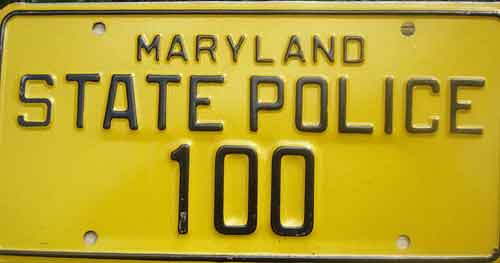 Special reflective version over galvanized steel number 100 issued to MSP/CMV veteran Menasha Katz.
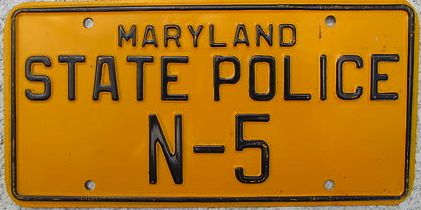
The exact year is unknown, but it is believed that around 1963, the Maryland State Police once again "re-plated" its fleet of marked patrol vehicles. These plates were once again black over mustard yellow or yellow-orange, and some almost burnt orange. Some plates were made of thin embossed steel, some were made of a more dense embossed steel. Material and colors varied and alternated over the course of 25 years of issuance. The state name once again occupied the top center of the plate. The title STATE POLICE spanned the upper center for the plate below the state name. Headquarters plates were numerical and Troop plates utilized the alpha prefix followed by the unit number. Special units like Aviation, Canine and Tactical used special prefixes ahead of the assignment number which will be outlined below.
The table below indicates the Maryland State Police Barracks designations as they are known today. Some earlier difference to this list is:
Troop H was at that time Waldorf Barracks
Troop K was at that time Security Barracks
Troop R was at that time Valley Barracks
MSP Barrack |
Location |
Areas Covered |
|---|---|---|
| Barrack A - Waterloo | Jessup | Howard |
| Barrack B - Frederick | Frederick | Frederick |
| Barrack C - Cumberland | Cumberland | Allegany |
| Barrack D - Bel Air | Bel Air | Harford |
| Barrack E - Salisbury | Salisbury | Wicomico |
| Barrack F - North East | North East | Cecil |
| Barrack G - Westminster | Westminster | Carroll |
| Barrack H - La Plata | La Plata | Charles |
| Barrack I - Easton | Easton | Caroline, Dorchester, Talbot |
| Barrack J - Annapolis | Annapolis | Annapolis |
| Barrack L - Forestville | Forestville | Prince George's (south of Route 50) |
| Barrack M - JFK Memorial Highway | Perryville | Cecil, Harford, Baltimore |
| Barrack N - Rockville | Rockville | Montgomery |
| Barrack O - Hagerstown | Hagerstown | Washington |
| Barrack P - Glen Burnie | Glen Burnie | Anne Arundel |
| Barrack Q - College Park | College Park | Prince George's (north of Route 50) |
| Barrack R - Golden Ring | Baltimore | Baltimore |
| Barrack S - Centreville | Centreville | Kent, Queen Anne's |
| Barrack T - Leonardtown | Leonardtown | St. Mary's |
| Barrack U - Prince Frederick | Prince Frederick | Calvert |
| Barrack V - Berlin | Berlin | Worcester |
| Barrack W - Mc Henry | Mc Henry | Garrett |
| Barrack X - Princess Anne | Princess Anne | Somerset |
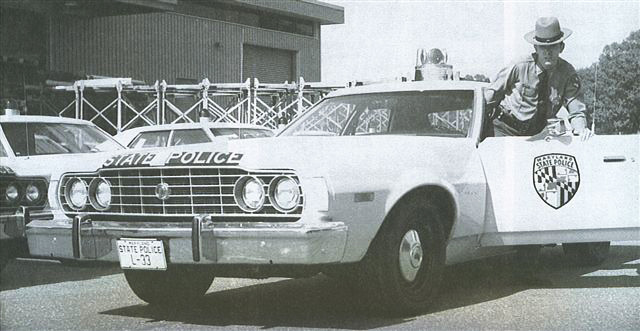
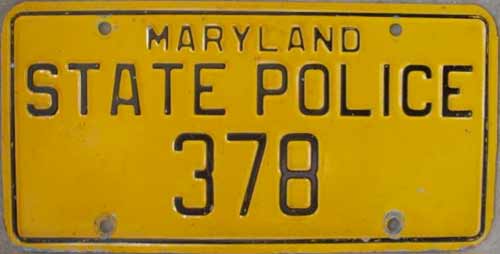 Circa 1963-1984 issue. Embossed steel. Headquarters number.
 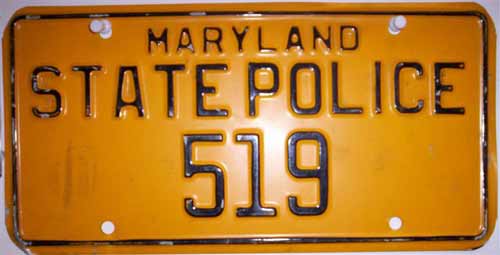 Circa 1963-1984 issue. Embossed steel. Headquarters number.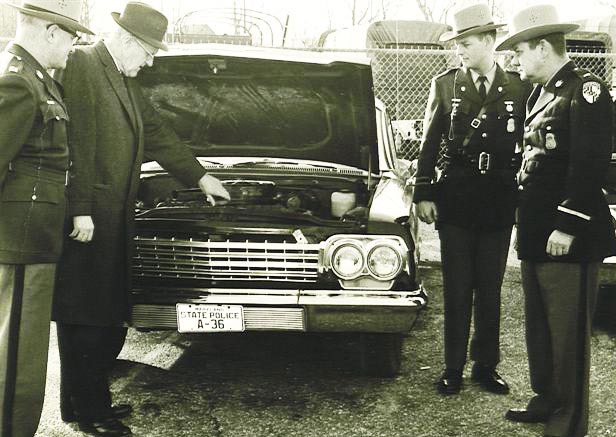
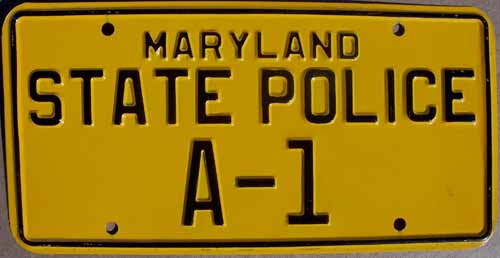 Circa 1963-1984 issue. Embossed steel. Mustard yellow background.
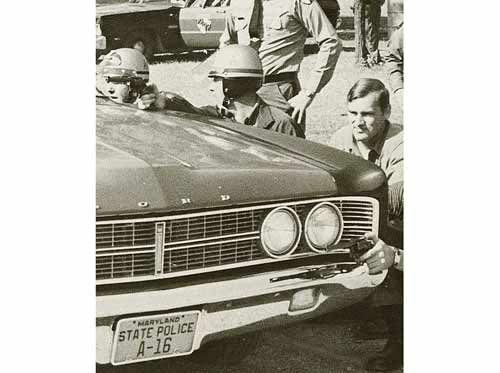 Waterloo Barracks Car 16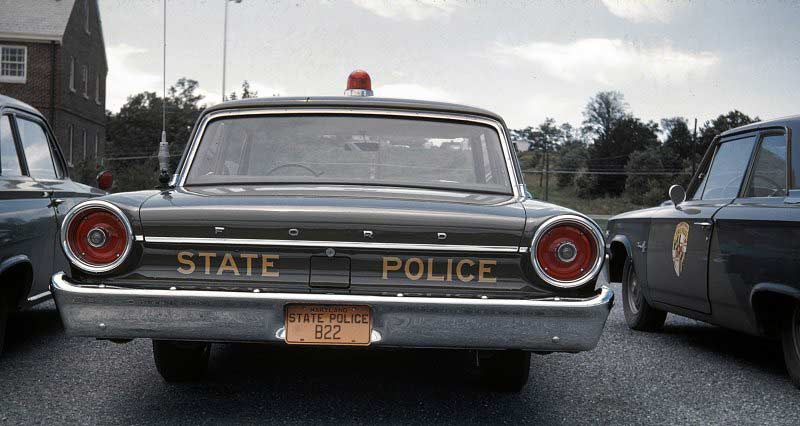
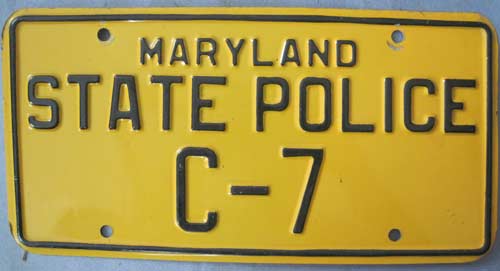 Circa 1963-1984 issue. Embossed steel. Mustard yellow background
 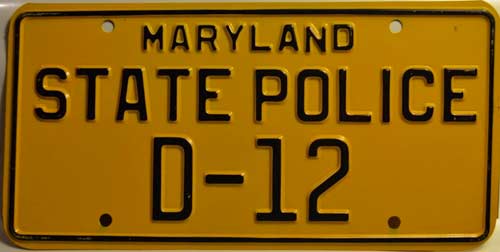 Circa 1963-1984 issue. Embossed steel. Mustard yellow background
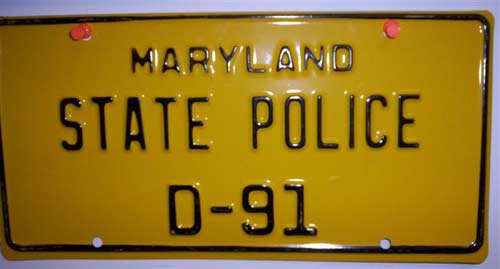 Circa 1963-1984 issue. Embossed thin steel version with smaller dies. Mustard yellow background.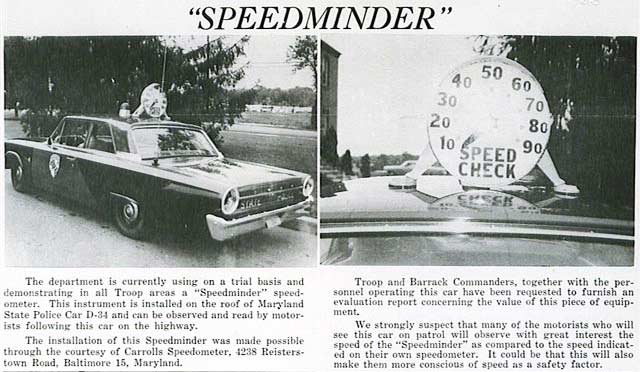
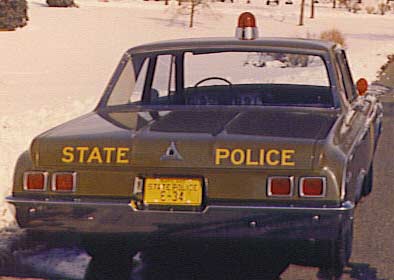 1964 MSP Dodge out of Salisbury Barracks
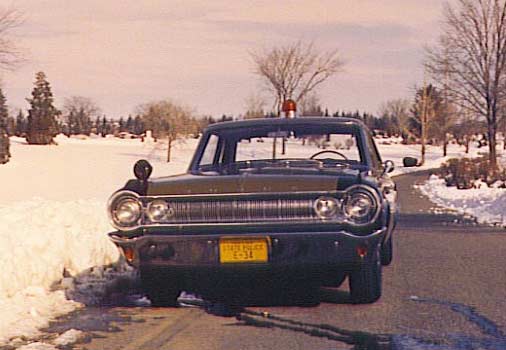 Salisbury Barracks- Car 34
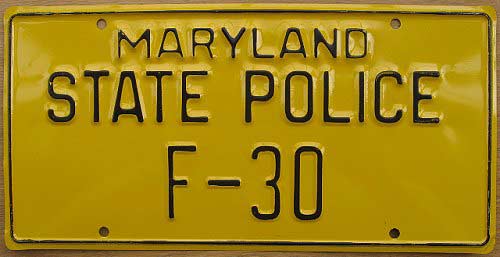 Circa 1963-1984 issue. Embossed thin steel version with taller thin dies for Troop letter and number.
 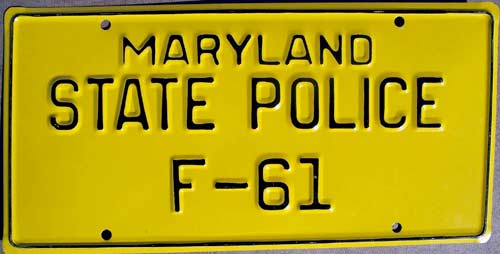 Circa 1963-1984 issue. Embossed thin steel version with taller short dies for Troop letter and number.
 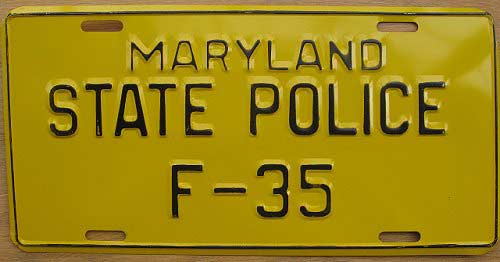 Circa 1963-1984 issue. Embossed thin steel version with elongated mounting slots instead of smaller round mounting holes. Mustard yellow background.
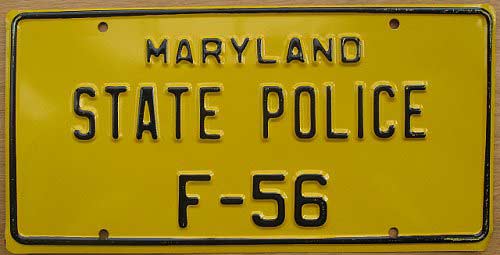 Circa 1963-1984 issue. Embossed thin steel version with smaller dies for state name and STATE POLICE.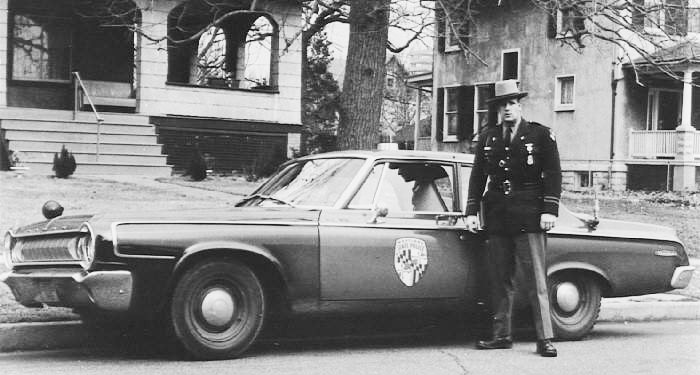
In 1961, the Maryland State Police was one of the first state police agencies to introduce a Canine Unit to their complement. Around 1964 a special license plate attachment was made for Maryland State Police Canine patrol vehicles. The plate was embossed metal and measured approximately 4" x 12". The top two mounting holes were meant to be lined-up to the bottom mounting holes of the regular MSP license plate, so there is a blank section for the top 1/4 span of the plate. Below that is BEWARE OF DOG over K-9 CORP. A partial border travels from the bottom span of the plate and up the sides just shy of the top 1/4 of the plate.
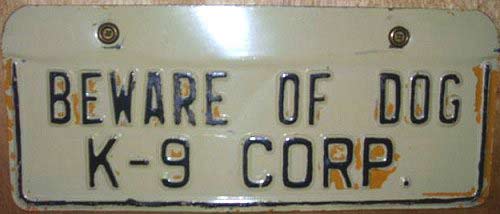 Circa 1964-1970 K-9 Handler license plate attachment. Embossed steel. Approximately 4" x 12". Affixed below regular MSP license plate.
 Need a better quality photo of this patch- Please help.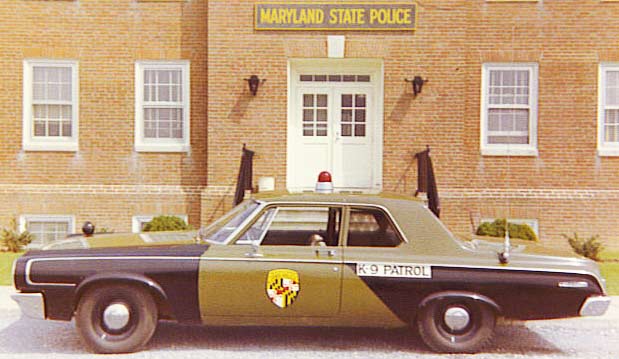
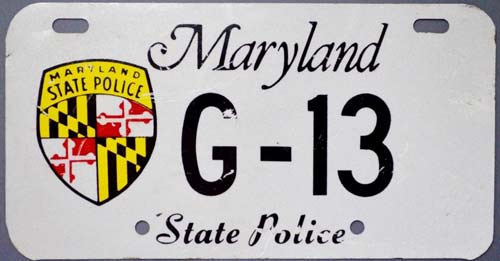
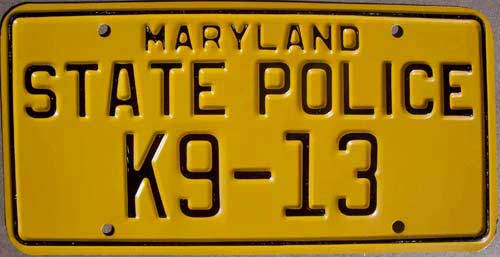 Circa 1963-1984 issue. K-9 Unit 13. Embossed steel.
 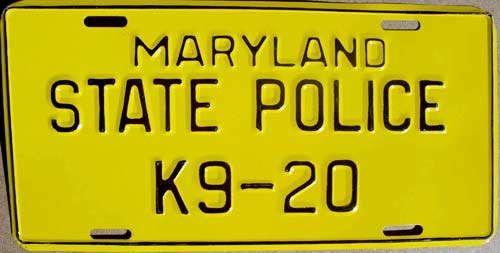 Circa 1963-1984 issue. K-9 Unit 20. Embossed thin steel. Mustard yellow background with smaller dies and elongated mounting slots.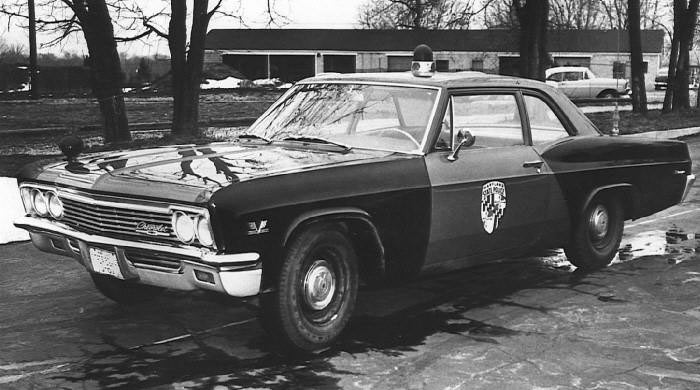
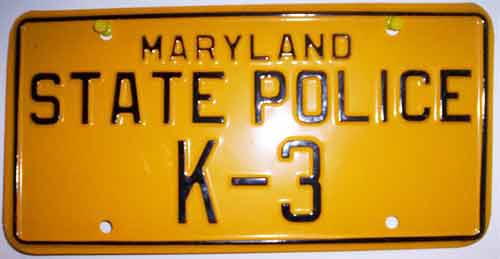 Circa 1963-1984 issue. Embossed steel. Yellow-orange background.
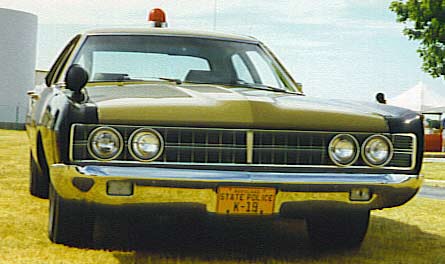 Security Barracks- Car 19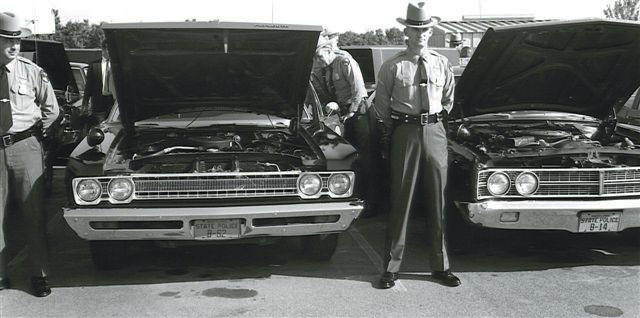
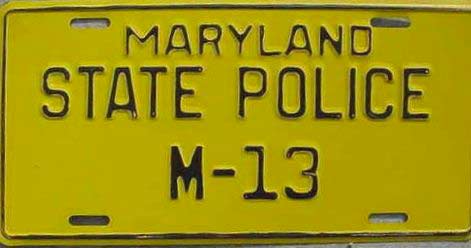 Circa 1963-1984 issue. Embossed thin steel. Mustard yellow background with smaller dies and elongated mounting slots.
 Circa 1963-1984 issue. Embossed steel. Yellow-orange background with smaller round mounting holes.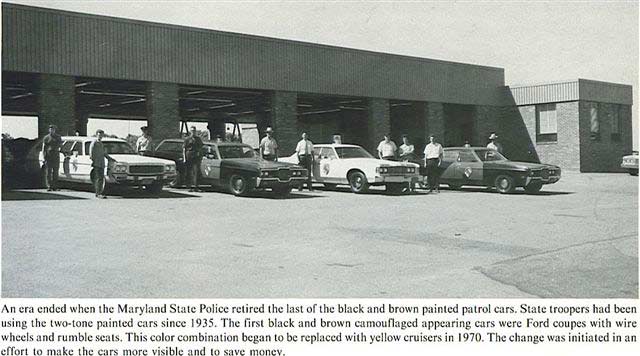
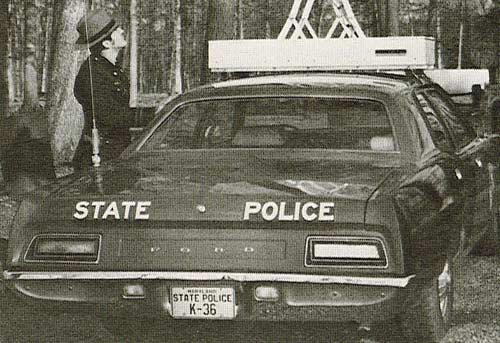 Security Barracks- Car 36. Circa 1971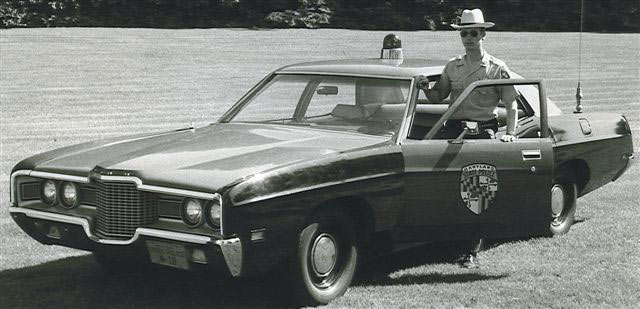
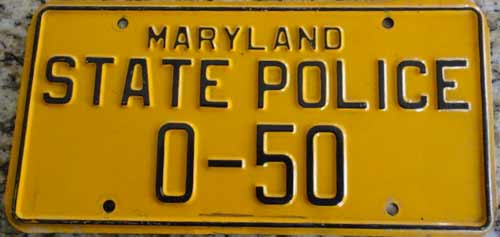 Circa 1963-1984 issue. Embossed steel. Yellow-Orange background.
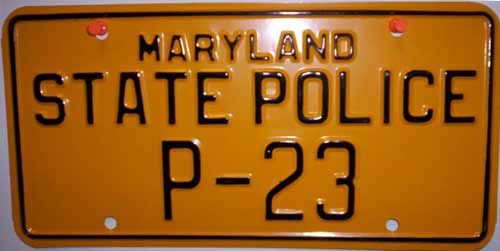 Circa 1963-1984 issue. Embossed steel. Burnt orange background.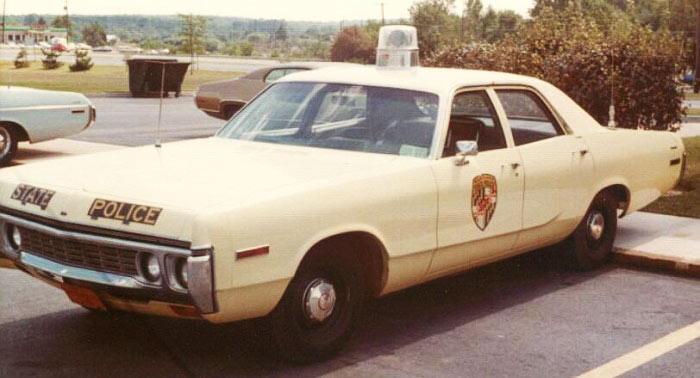
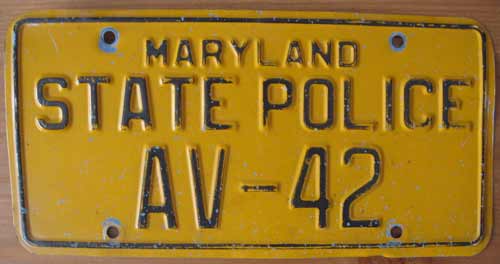 Circa 1963-1984 issue. Embossed steel.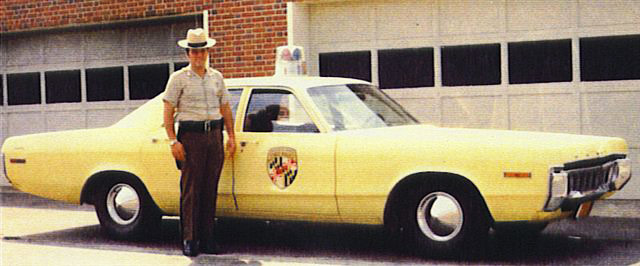
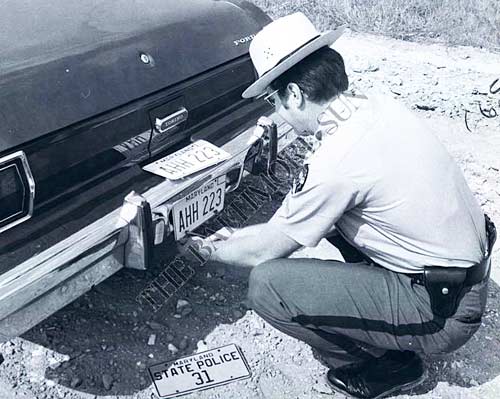 Switching over to passenger plates on unmarked car-Sneaky!
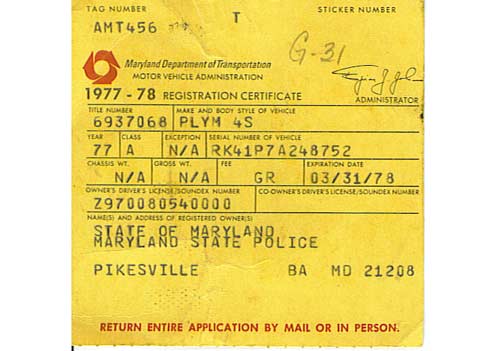 Passenger registration AMT 456 for SP number G-31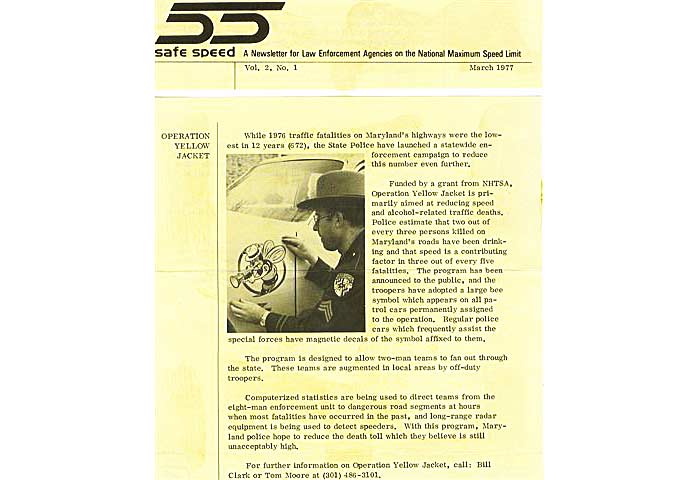
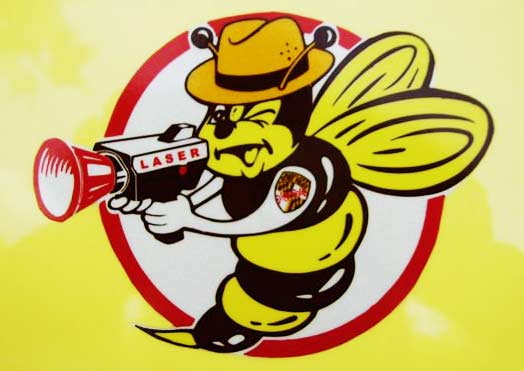 Operation Yellow Jacket emblem
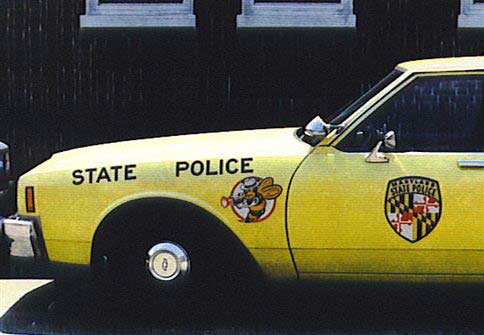 Placement of emblem on front fender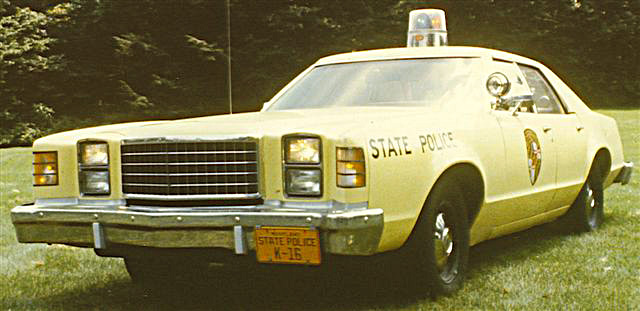
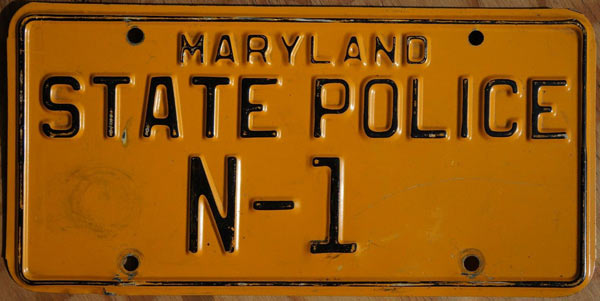 Circa 1963-1984 issue. Embossed steel.
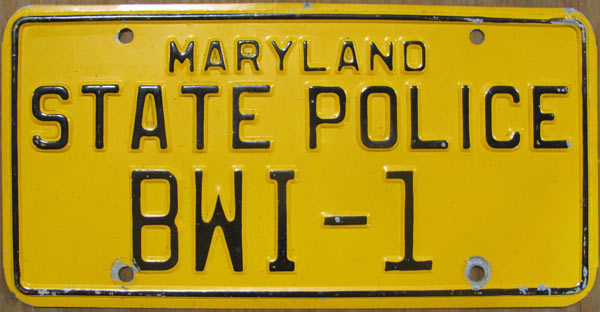 Circa 1963-1984 issue. Embossed steel. Circa 1963-1984 issue. Embossed steel.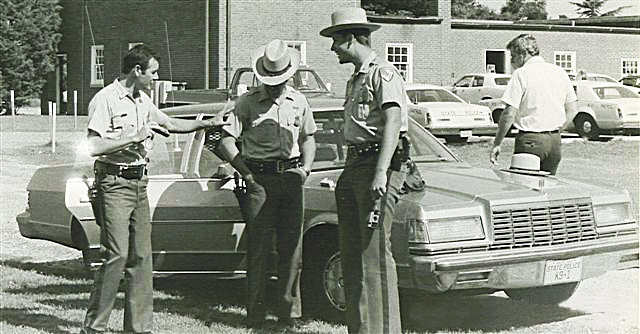
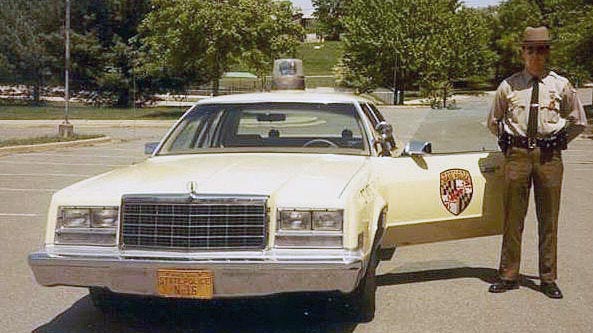
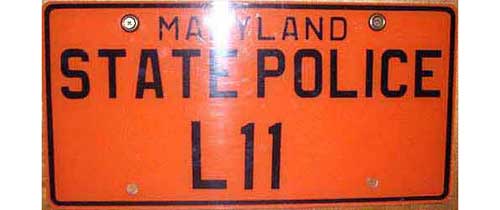 1981 Special Project License Plate (SPLP) Test plates. Only known survivors of 24 experimental plastic license plates tested by the MSP that year to determine suitability and durability for plastic license plates to be used over a 5 year term.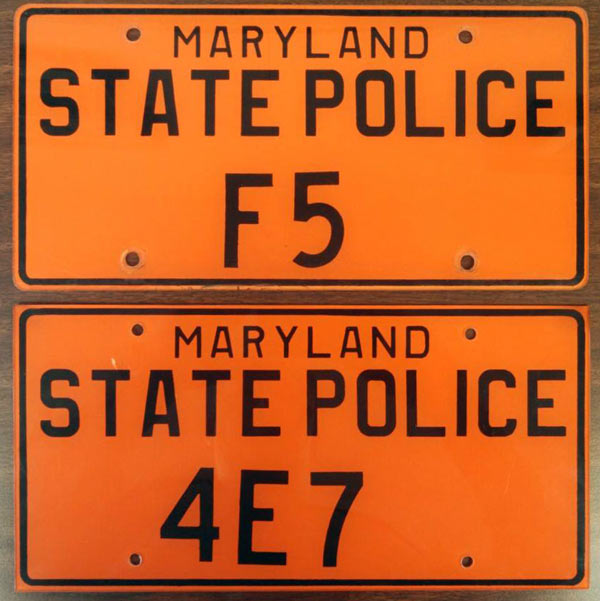
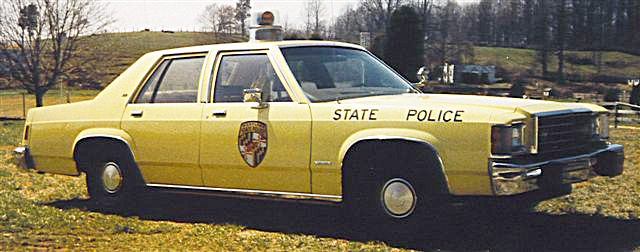
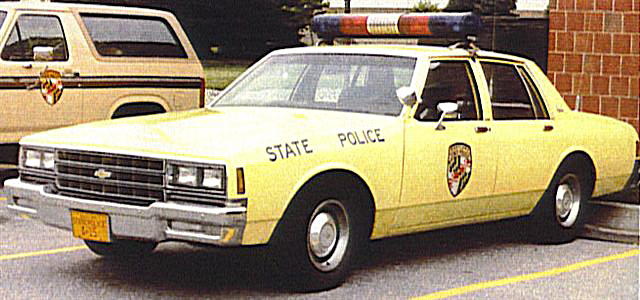
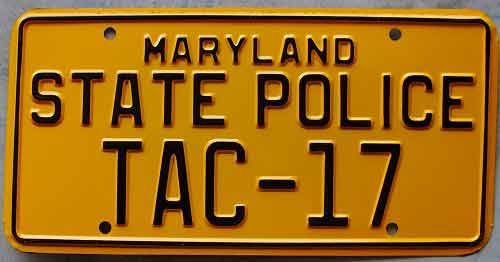 Circa 1963-1984 issue. Embossed steel.
 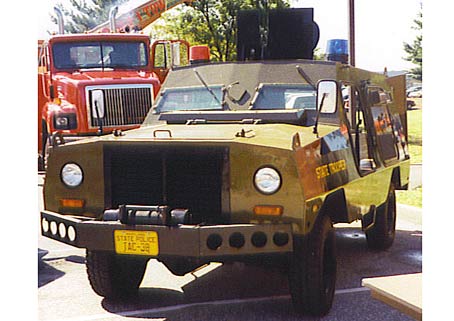 Tactical Unit 38
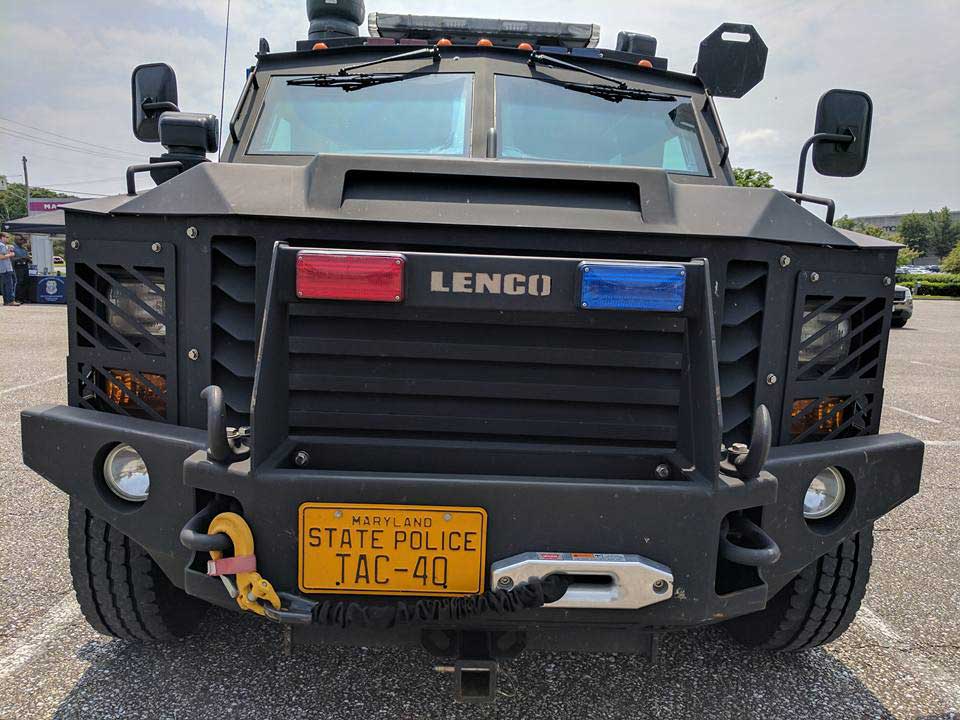 2017 MSP Tactical Unit displaying old-style orange embossed steel TAC plate.
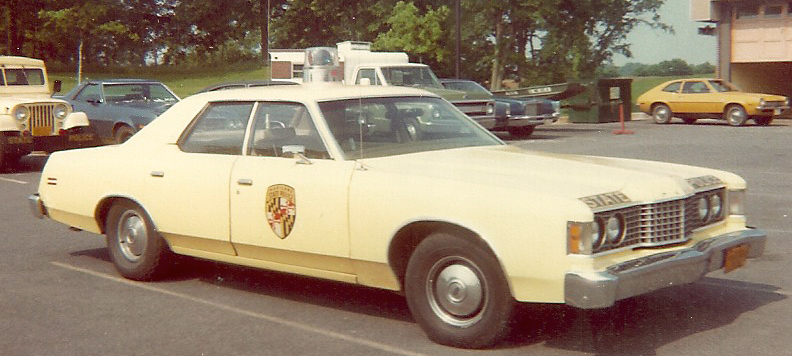
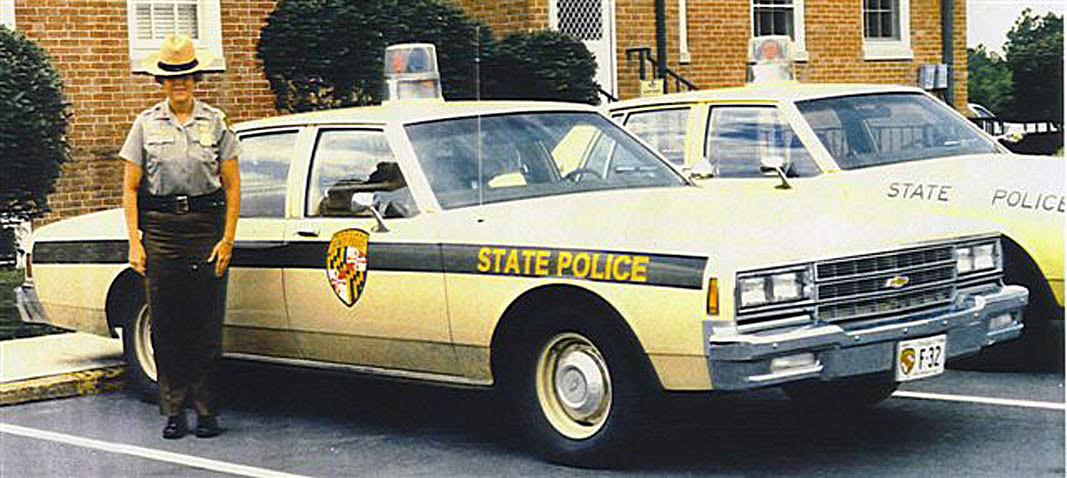
 In 1984, the Maryland State Police once again changed the color scheme of their marked patrol vehicles. The all-yellow color scheme used since 1970 was replaced with a cream-colored tint with a wide brown stripe around mid center of the car. The black over yellow MSP license plates continued in use until the unveiling of special graphic MSP 50th Anniversary license plates later in the year.

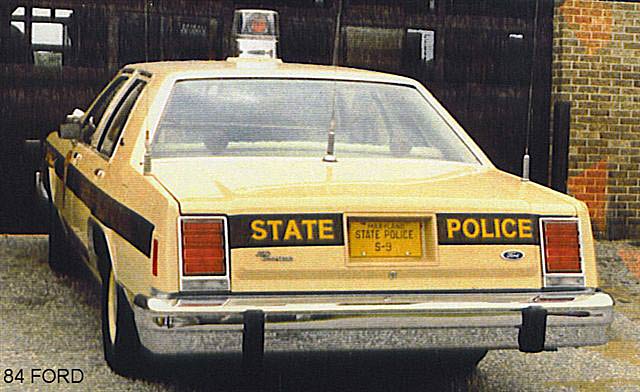 Centreville Barracks- Car 9
 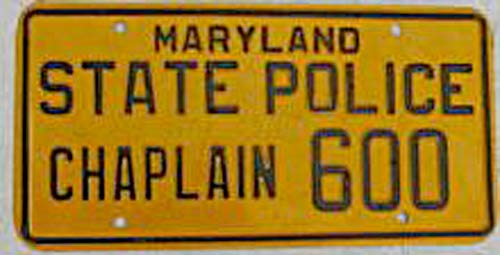 Circa 1963-1984 issue.
  Circa 1963-1984 issue.
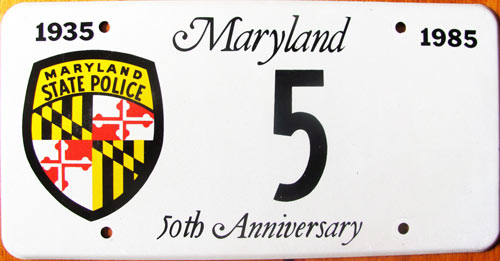
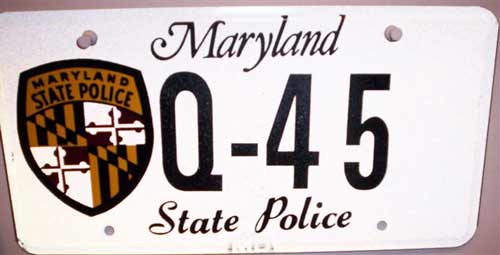
 In late 1984, the Maryland State Police commissioned special commemorative license plates to be made and issued in pairs to all marked vehicles of the MSP fleet in honor of the MSP's 50th Anniversary.
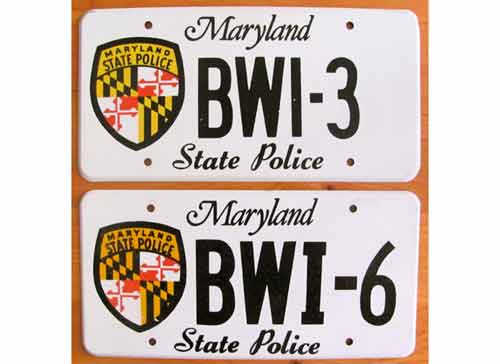
The plates were made of aluminum, entirely silkscreened, and the only embossing was the backside border edge of the plate. The background color was reflective white and had the state name in black stylized script in the top center of the plate with 1935 in the top left corner of the plate and 1985 in the top right corner. The far left center of the plate was occupied with a full color crest of the MSP followed by the assignment number in black. The bottom line of the plate had the stylized inscription 50th Anniversary in black. Much like the previous issues, there were three types used on this base:
-Number coded plates for Headquarters and some special units.
-Barracks plates where the assignment number is preceded by the Barracks letter designation.
-Letter coded plates for special units such as K9, Tactical and Commercial Vehicle Enforcement.
The 50th Anniversary plates were in use throughout the Golden Anniversary year and began to be phased out around 1989 where the graphic design was kept, however the 50th Anniversary designations were dropped.
 50th Anniversary issue.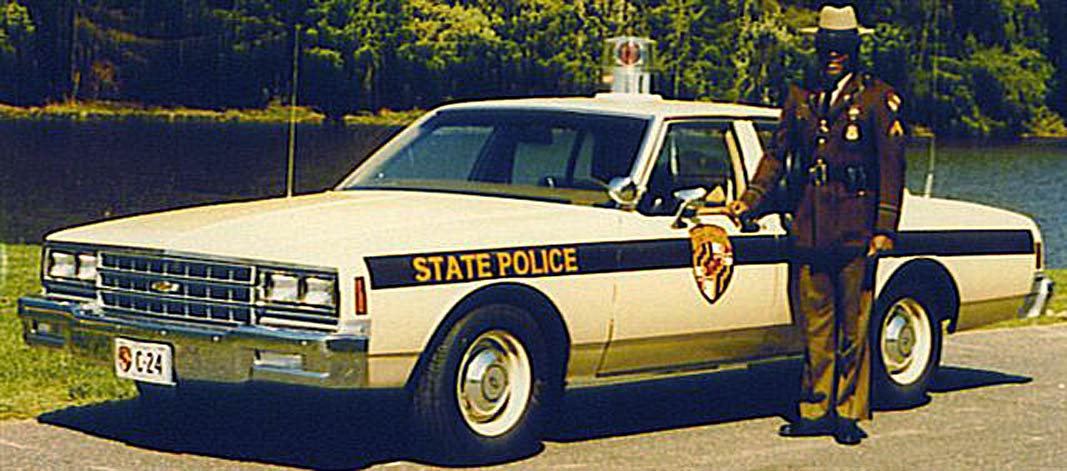
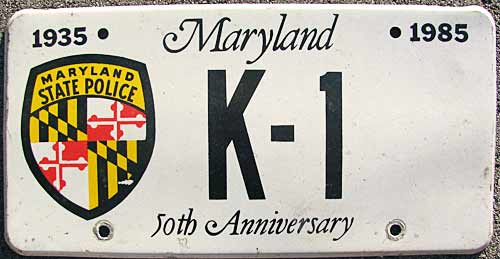 50th Anniversary issue.
 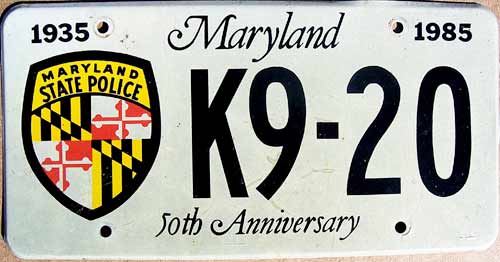 50th Anniversary issue.
 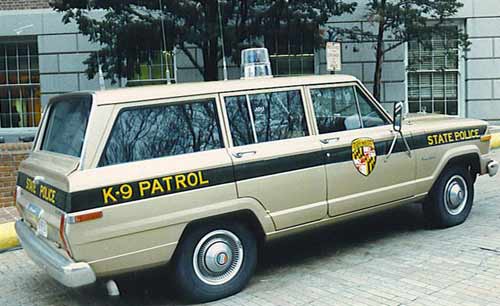 MSP K-9 Patrol Jeep Wagoneer
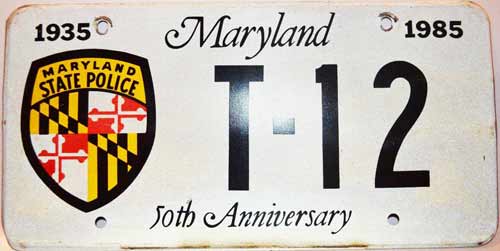 50th Anniversary issue.
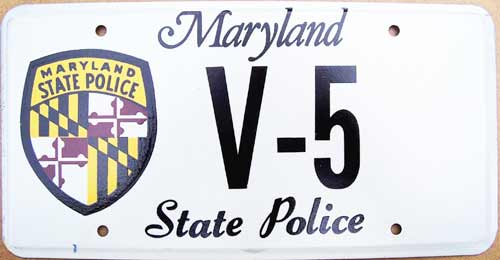
 In approximately 1989 into 1990, the MSP graphic license plates dropped the 50th Anniversary monickers but preserved the attractive all-screened graphic plate design with the full-color MSP emblem on the left. This graphic issue saw the return of steel used in the manufacture of the plates. The bottom line inscription was replaced with a stylized STATE POLICE.
These plates continued issuance until approximately 1995 when a return to non-graphic black over yellow plates took place.
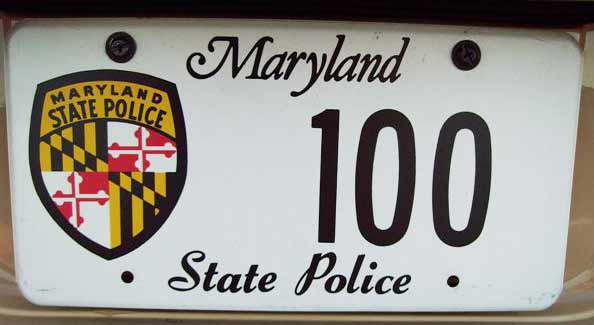 1990-1995 issue. Silkscreened steel.
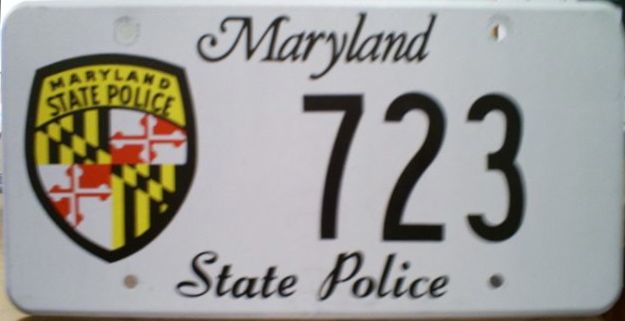 1990-1995 issue. Silkscreened steel.
 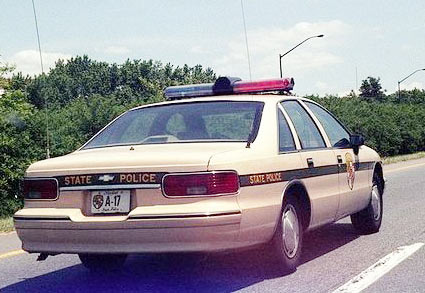 Troop A
 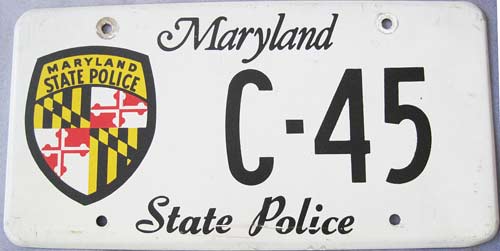 1990-1995 issue. Silkscreened steel.
 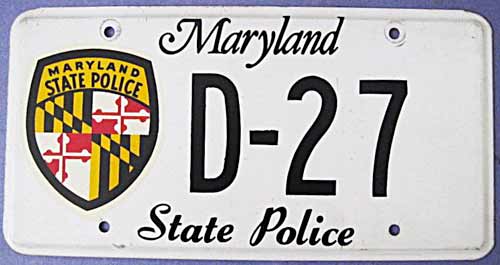 1990-1995 issue. Silkscreened steel.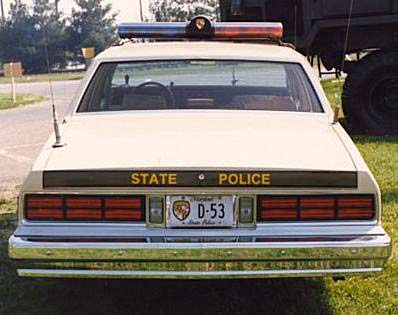
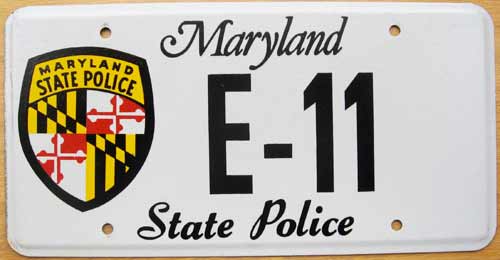 1990-1995 issue. Silkscreened steel.
 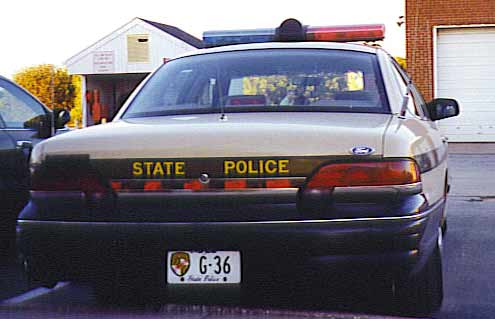 Westminster Barracks- Car 36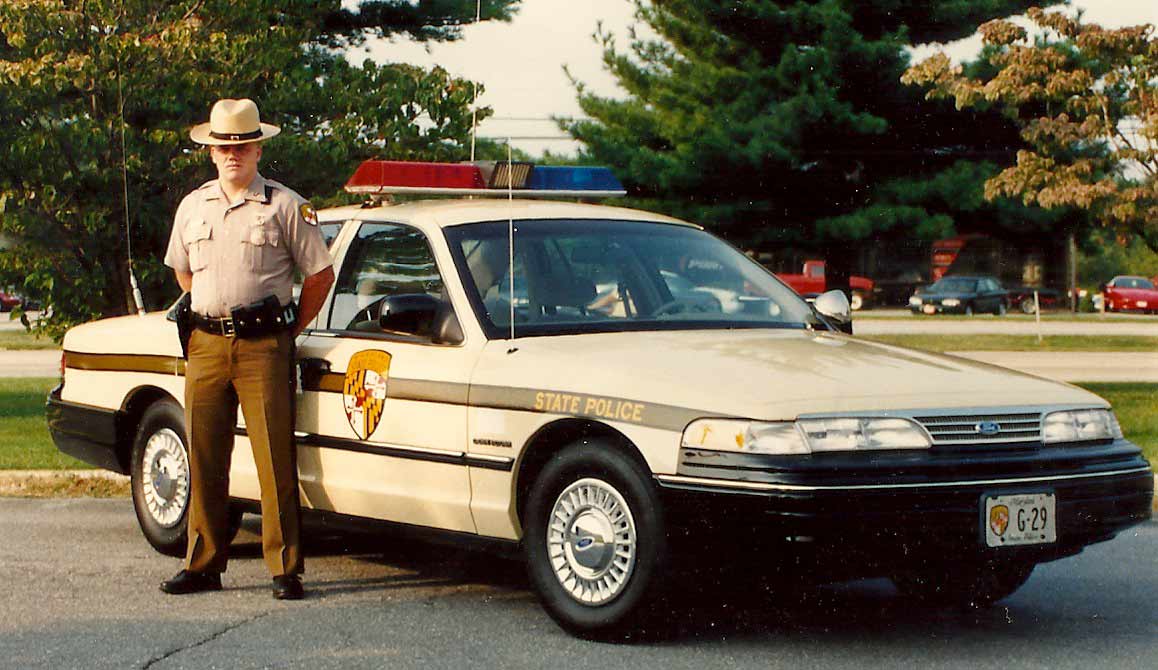
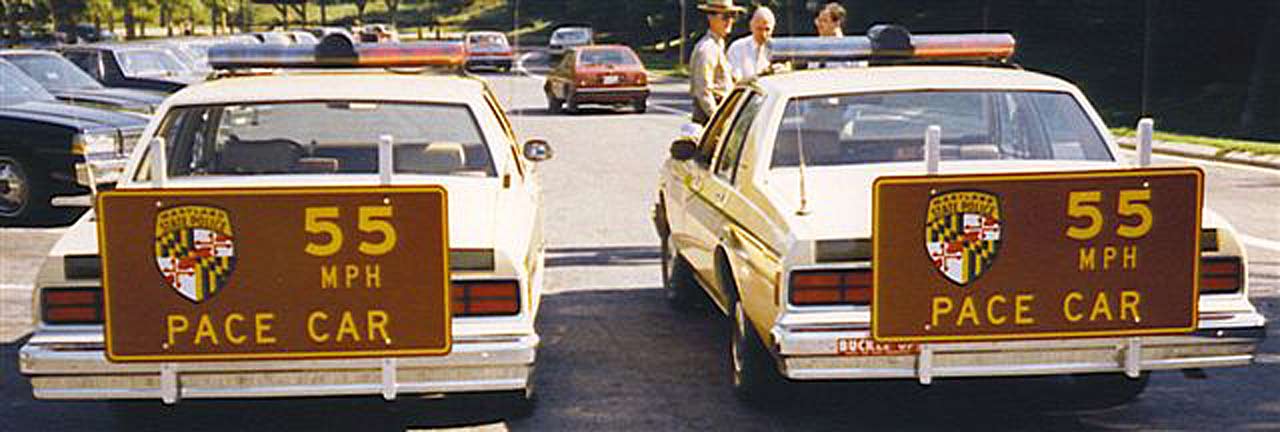
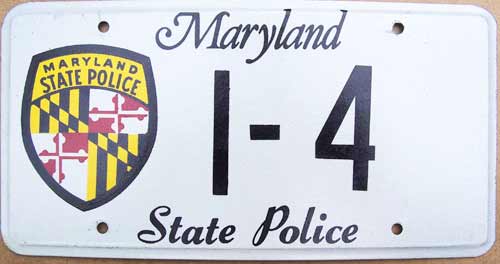 1990-1995 issue. Silkscreened steel.
 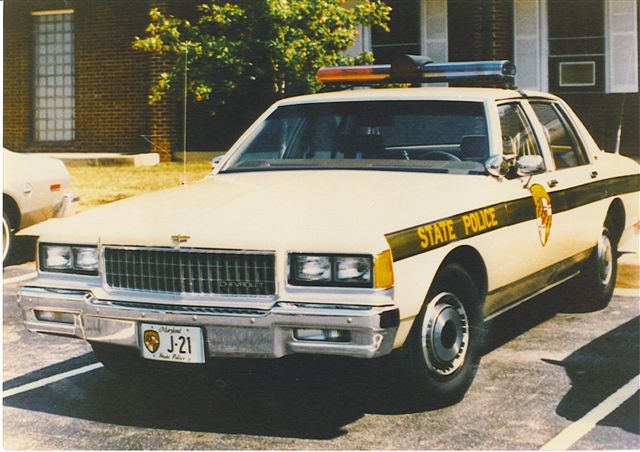 1990-1995 issue. Silkscreened steel.
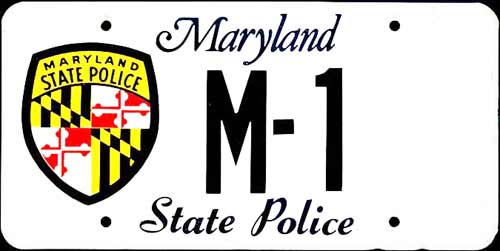 1990-1995 issue. Silkscreened steel.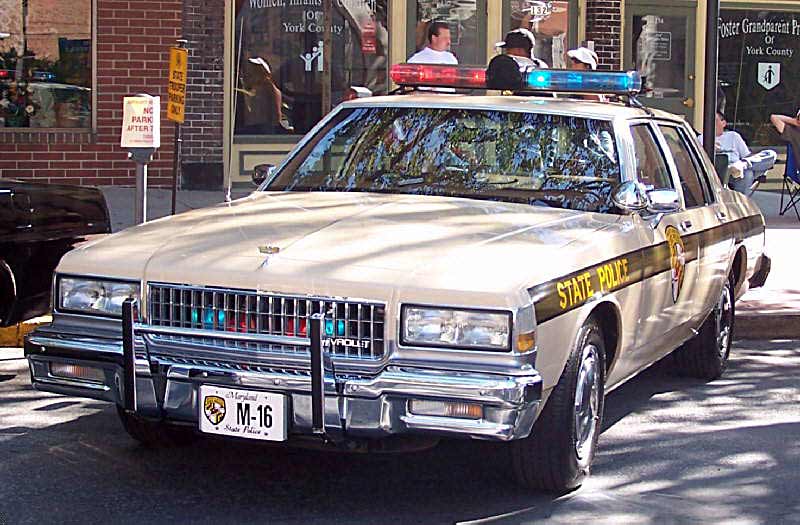
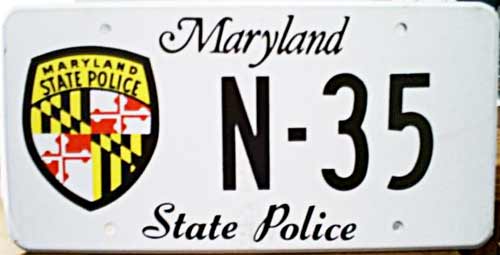 1990-1995 issue. Silkscreened steel.
  1990-1995 issue. Silkscreened steel.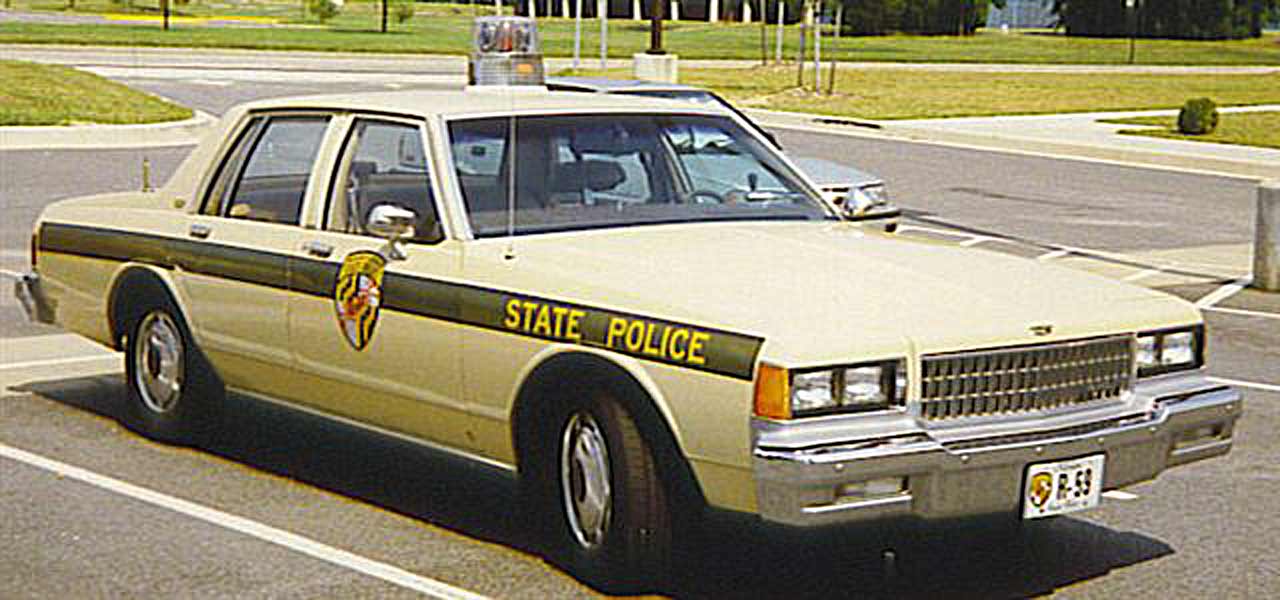
 1990-1995 issue. Silkscreened steel.
 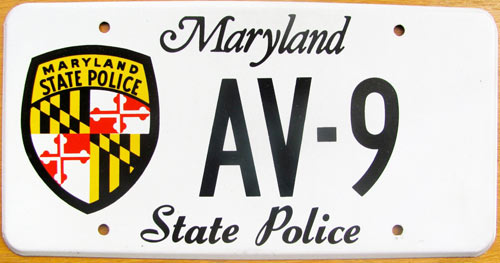 1990-1995 issue. Silkscreened steel.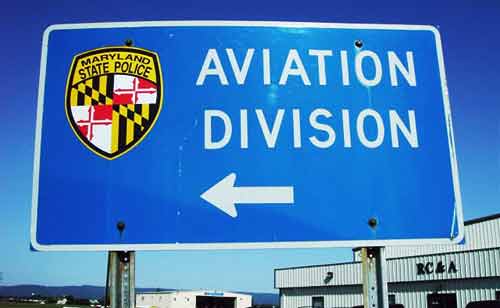
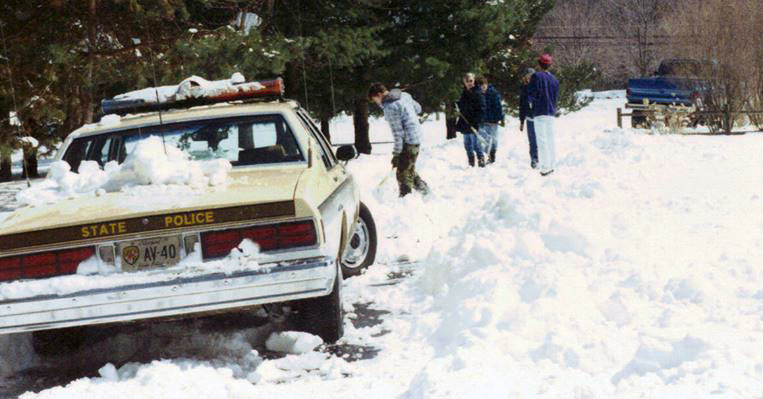
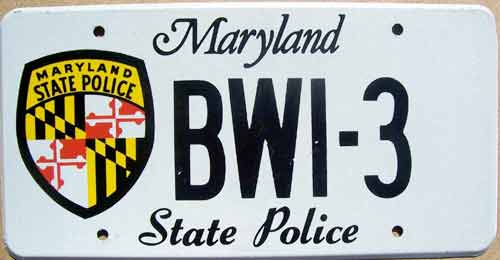 1990-1995 issue. Silkscreened steel.
 Difference in font used between early and later issue.
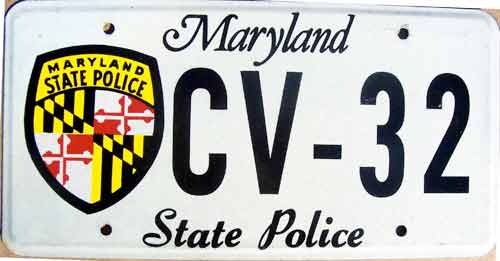 1990-1995 issue. Silkscreened steel.
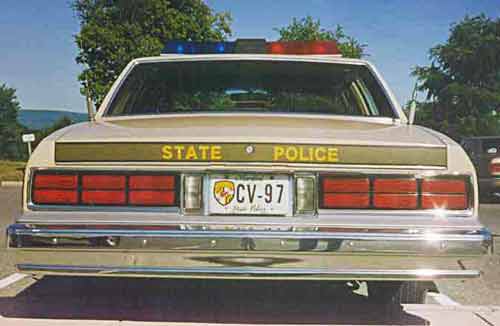 1990-1995 issue. Commercial Vehicle Enforcement- Car 97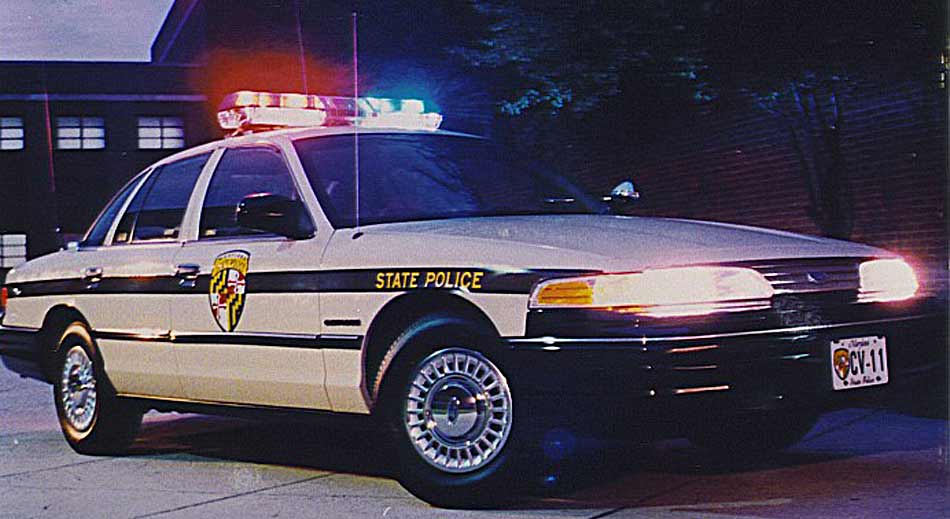
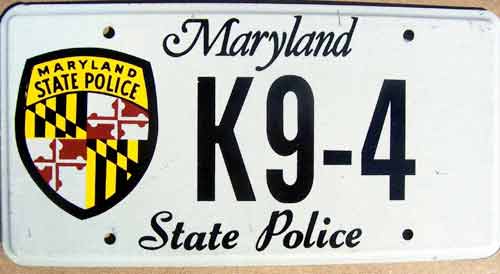 1990-1995 issue. Silkscreened steel.
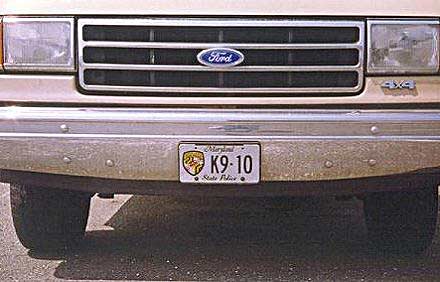 1990-1995 issue.
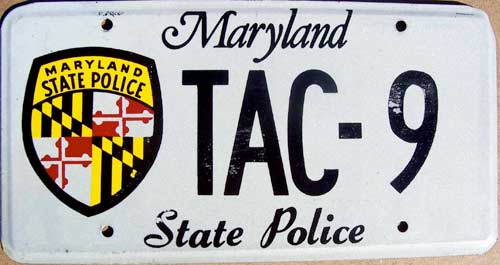 1990-1995 issue. Silkscreened steel.
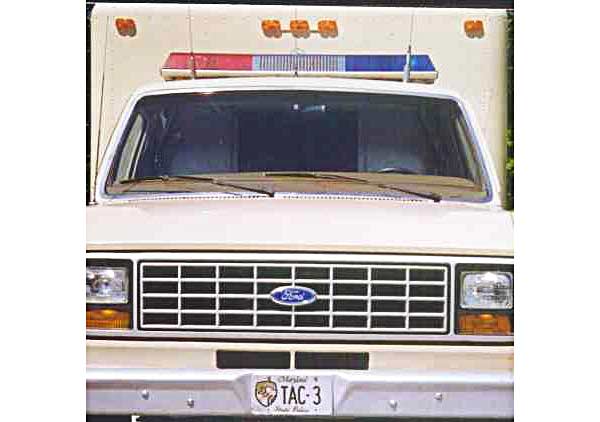 1990-1995 issue.
 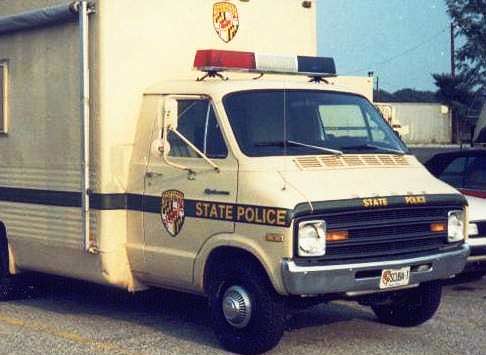 1990-1995 issue. SCUBA 1
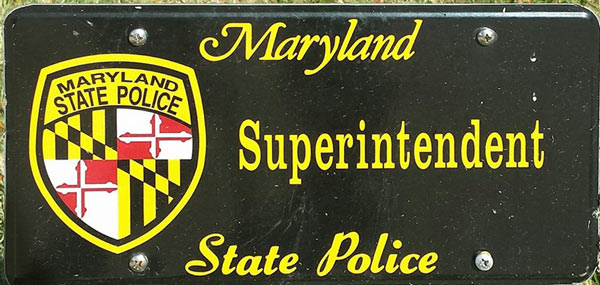 1990-1995 issue for Superintendent of State Police
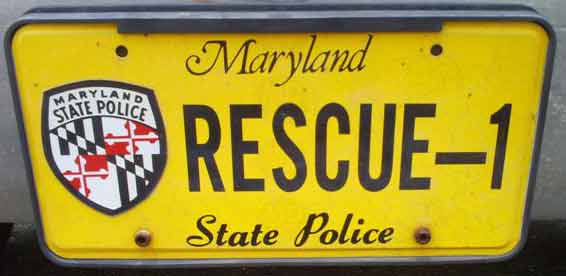 1990-1995 issue. Silkscreened steel.
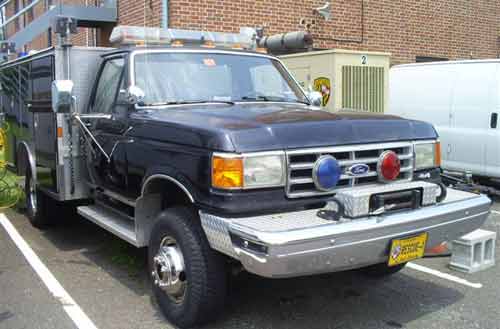 Rescue 1 Vehicle
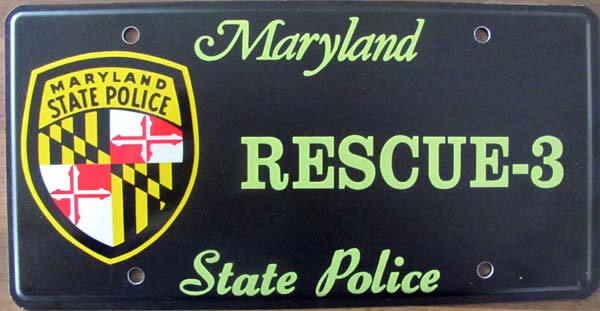 1990-Early 2000's issue.
 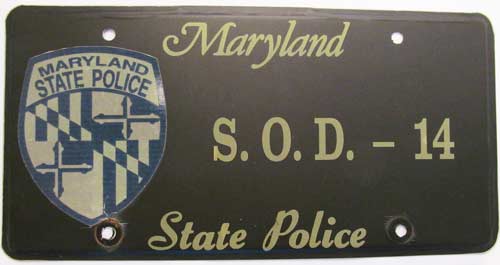 1990-1995 issue. Special Operations Division- Unit 14
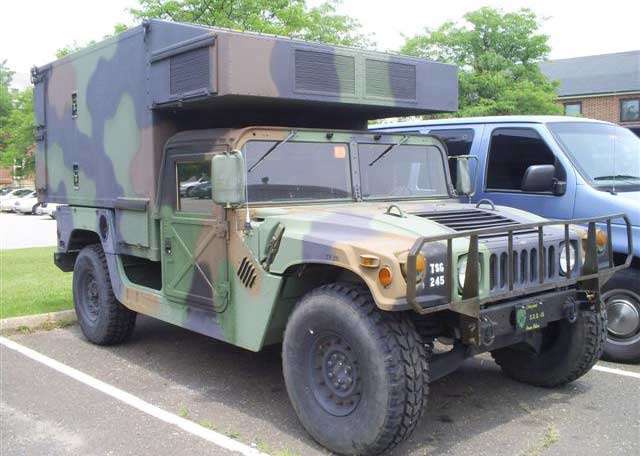 SOD Unit
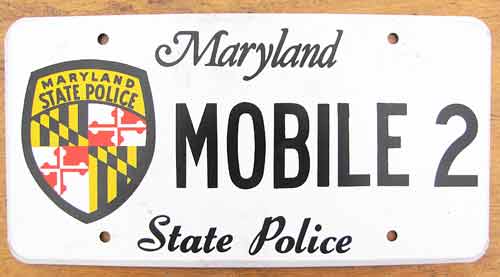 1990-1995 issue. Silkscreened steel.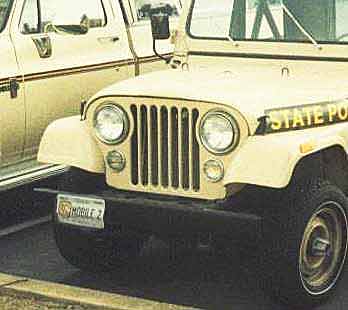
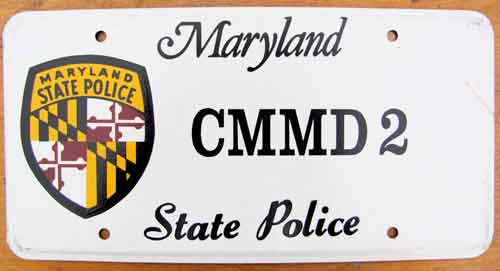 1990-1995 issue. Silkscreened steel.
 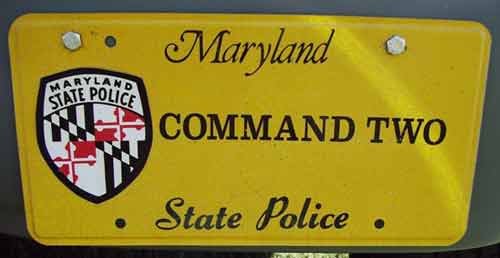 1990-1995 issue. Silkscreened steel.
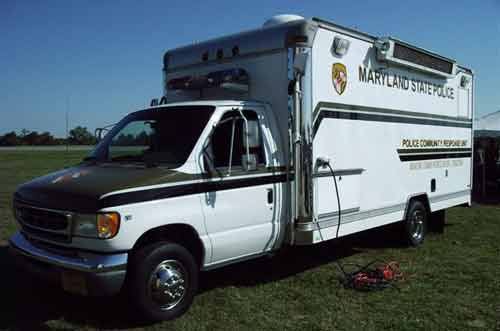 MSP Command 2
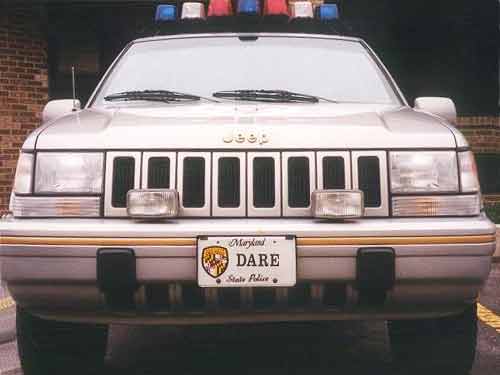 Drug Abuse Resistance Education
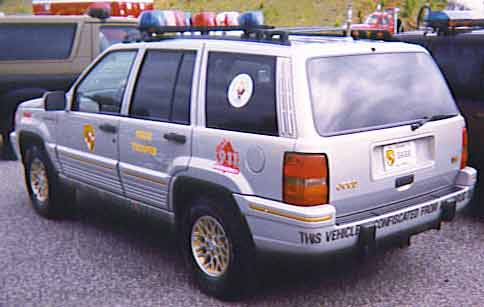 Seized drug dealer vehicle used for DARE Program.
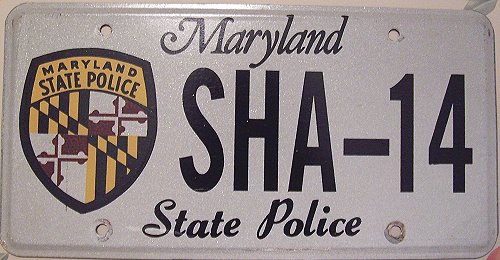 1990-1995 issue. Silkscreened steel.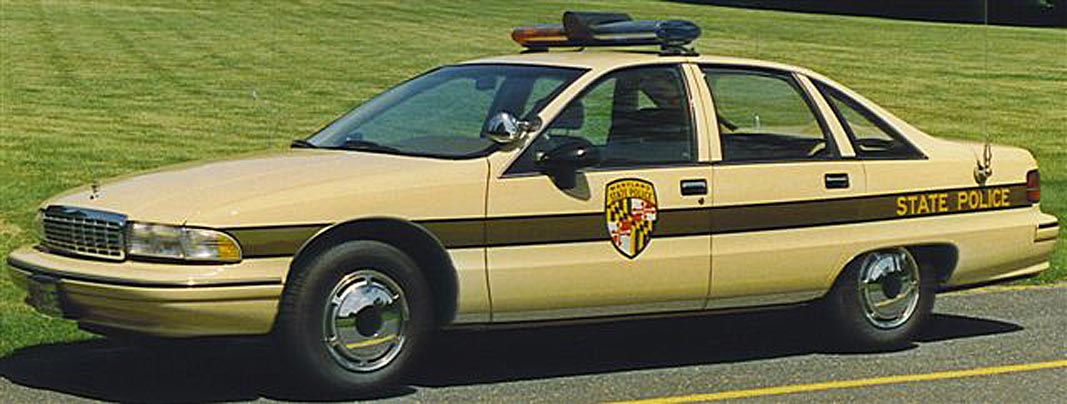
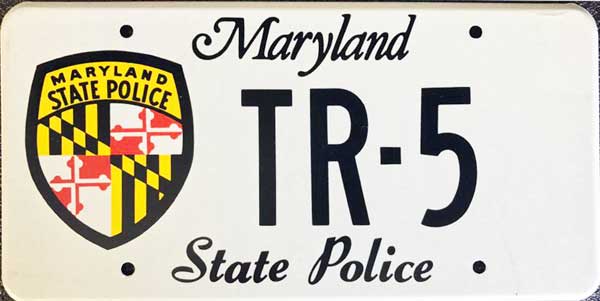 1990-1995 issue. Silkscreened steel.
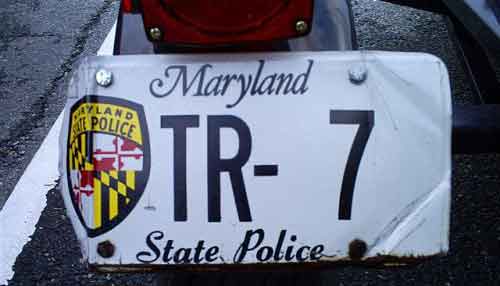 1990-1995 issue. Silkscreened steel.
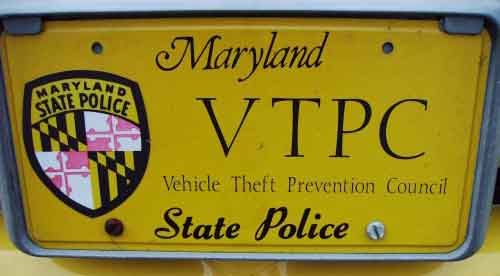 1990-1995 issue. Silkscreened steel.
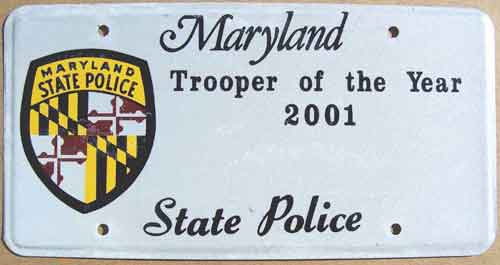 Maryland State Police's Trooper of the Year for 2001 Award Plate.
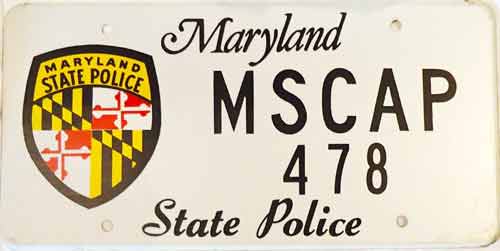 1990-1995 issue. Silkscreened steel.
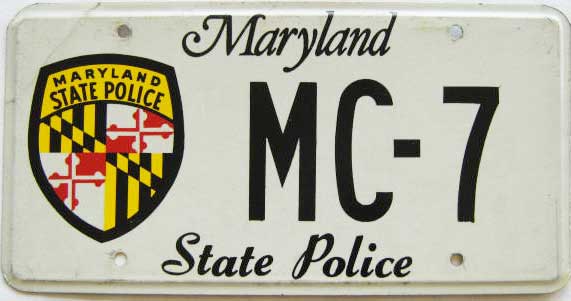 1990-1995 Full-size plate with Motorcycle prefix.
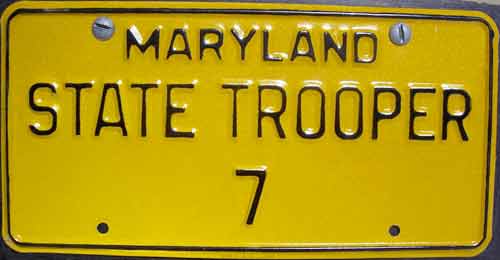
In 1995, the Maryland State Police went "Back to the Future" by resurrecting the old colors and layout of their original olive and black livery for their marked patrol vehicles as well as the old color and layout of the MSP's 1963-1984 MSP license plates. The earliest version was made of embossed galvanized steel with a step border. The reflective yellow-gold backgound also had subdued circular holograms running vertically down the center of the plate with MD over 95 inside the circles. The state name was embossed at the top center of the plate and STATE POLICE was placed along the center field of the plate. The assignment number however was quite small. It is entirely possible that this earliest issue may not have been run fleet-wide as the legibility of the small number was too compromised.
The issue that came on the heels of the first 1995 type was one where the return of the black painted border line around plate took place. The title STATE POLICE was replaced with the title STATE TROOPER and a larger assignment number took its place at the bottom of the plate. These plates also utilized the circular holograms down the center of the plate with MD 96 and MD 97 being two known examples.
This STATE TROOPER issue has been used consistently from late 1995 until the current day.
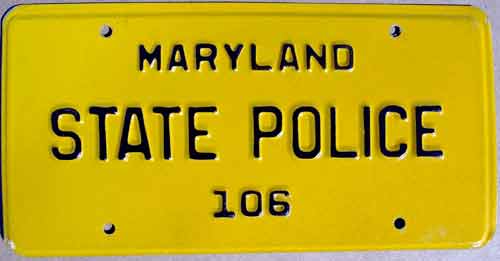 Early 1995-1996 issue.
  1997-Current issue.
 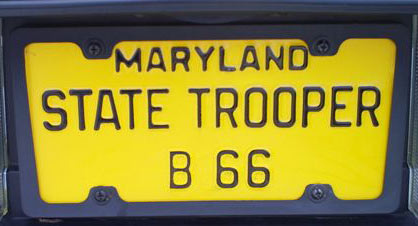 1997-Current issue. Embossed steel.
 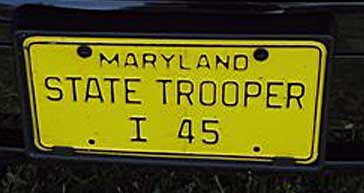 1997-Current issue. Embossed steel.
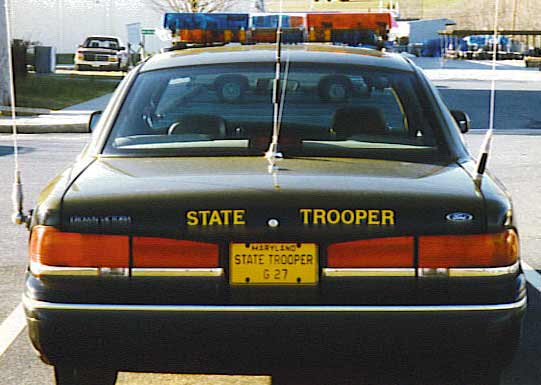 Westminster Barracks- Car 27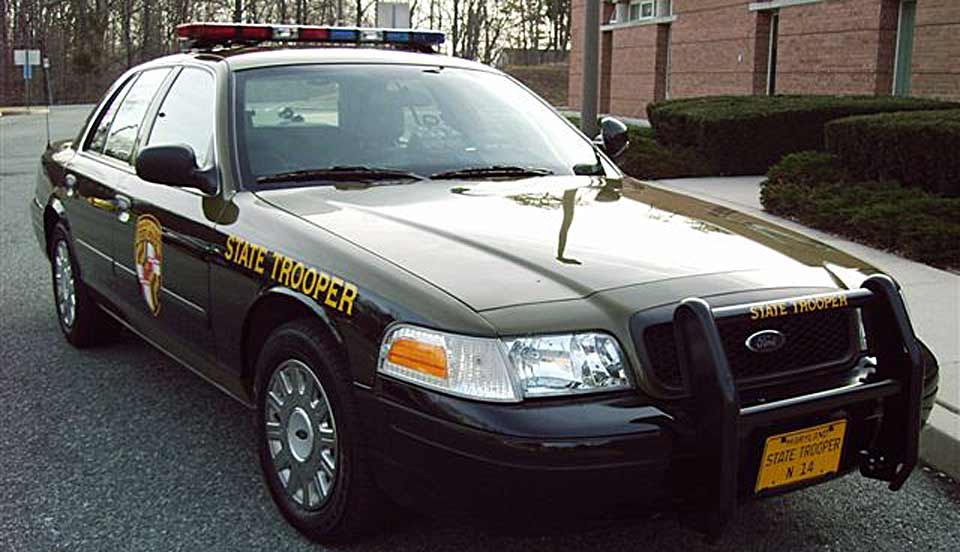
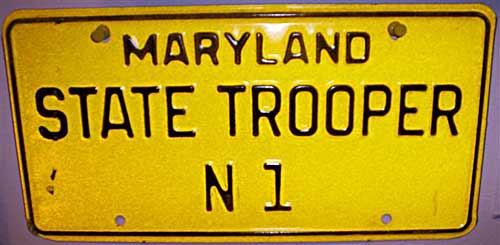 1997-Current issue. Embossed steel.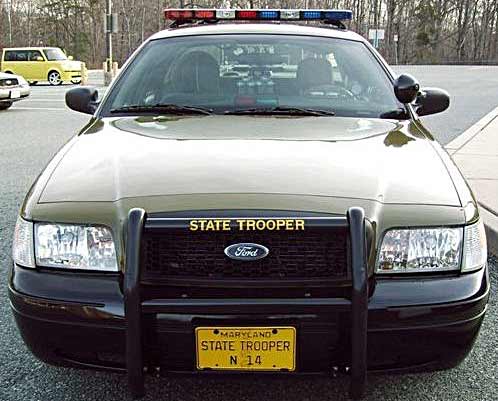
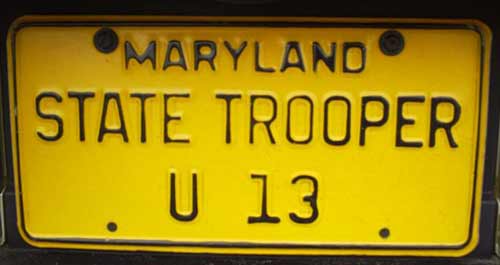 1997-Current issue. Embossed steel.
 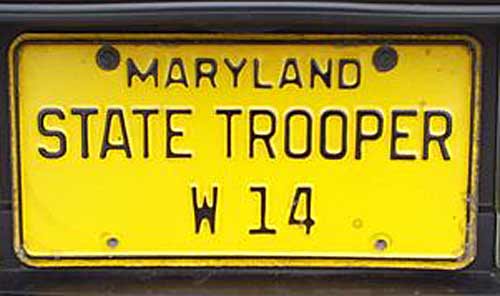 1997-Current issue. Embossed steel.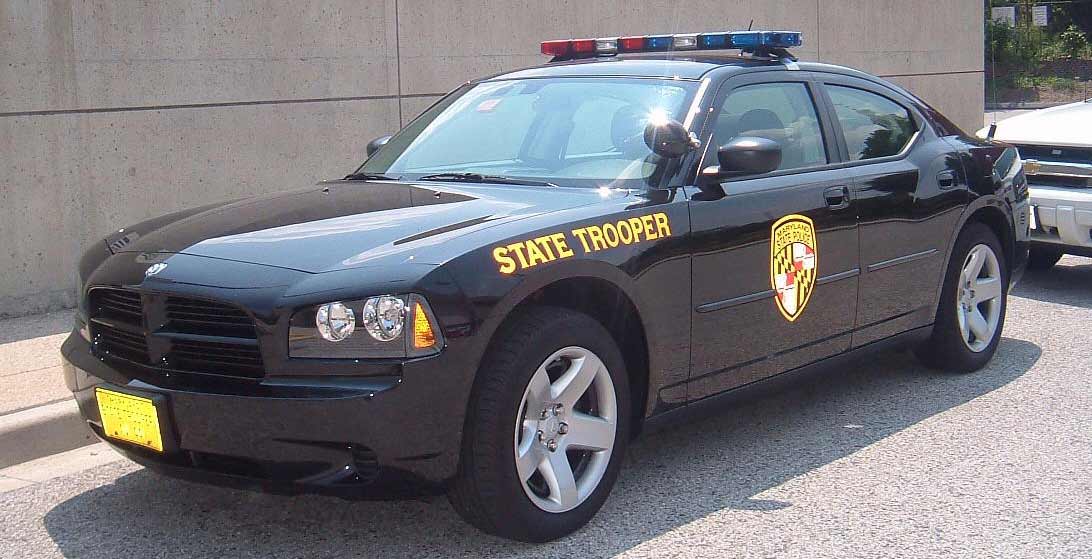
 (Courtesy Jason DeCesare)
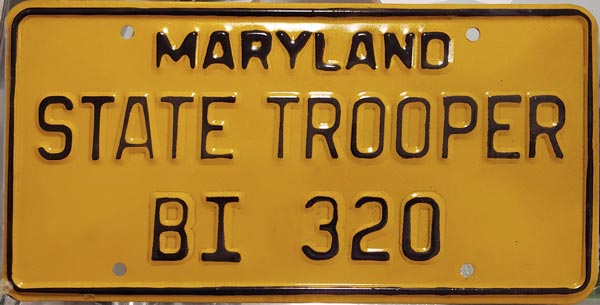 1997-Current issue. Embossed steel.
 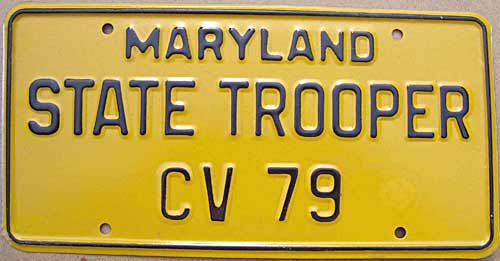 1997-Current issue. Embossed steel.
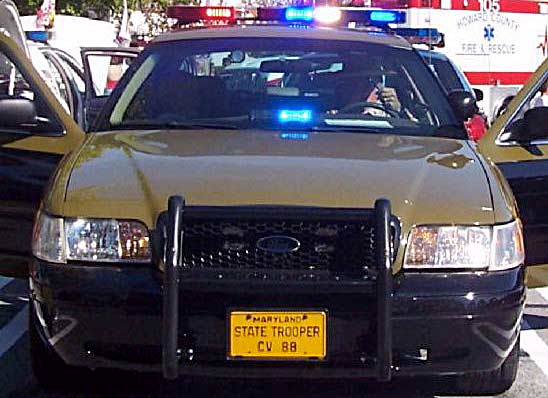 Commercial Vehicle Enforcement-
 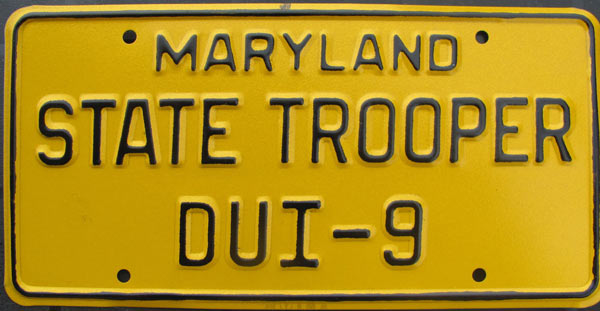 1997-Current issue.Embossed steel.
 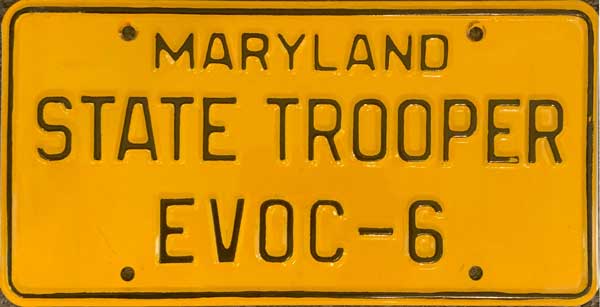 1997-Current issue. Embossed steel.
 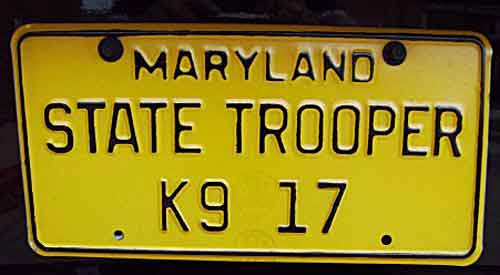 1997-Current issue. Embossed steel.
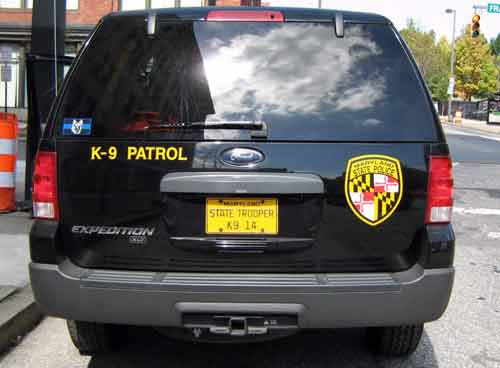 K-9 Patrol- Car 14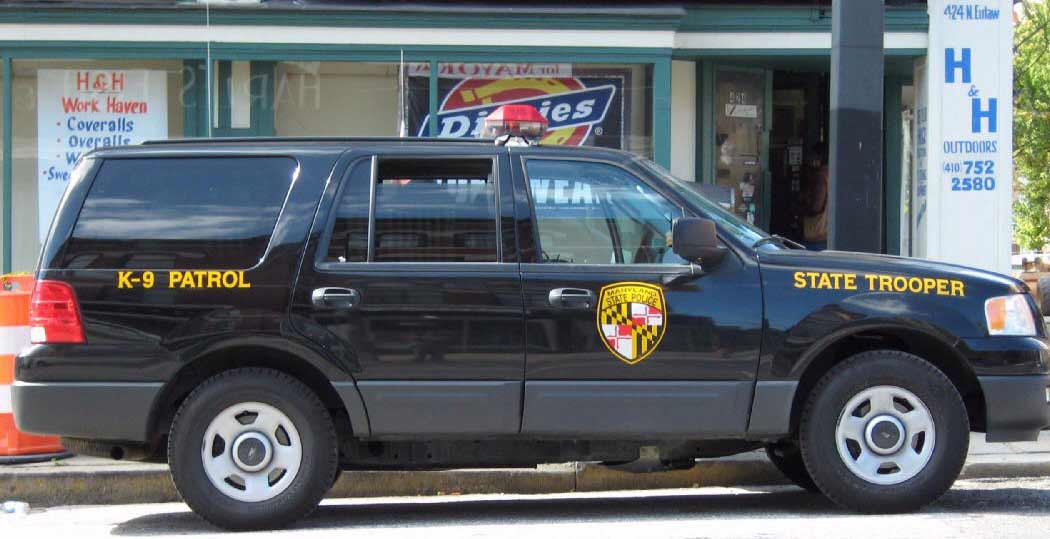
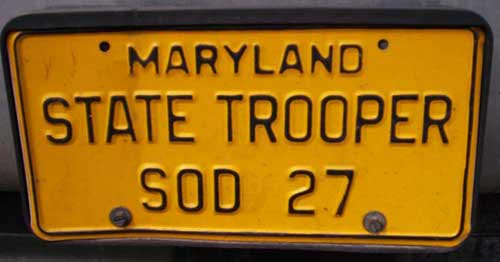 1997-Current issue. Embossed steel.
 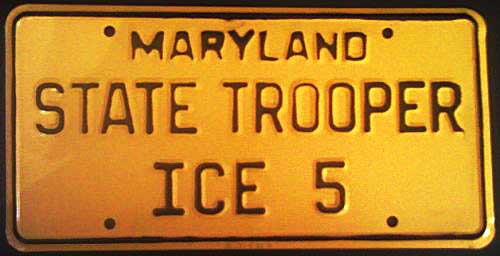 1997-Current issue. Embossed steel.
 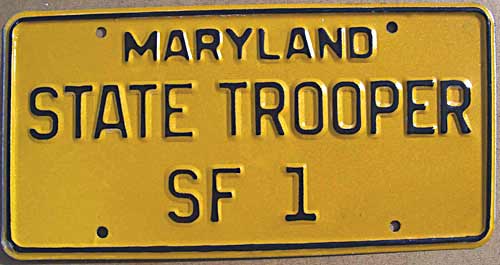 1997-Current issue. Embossed steel.
 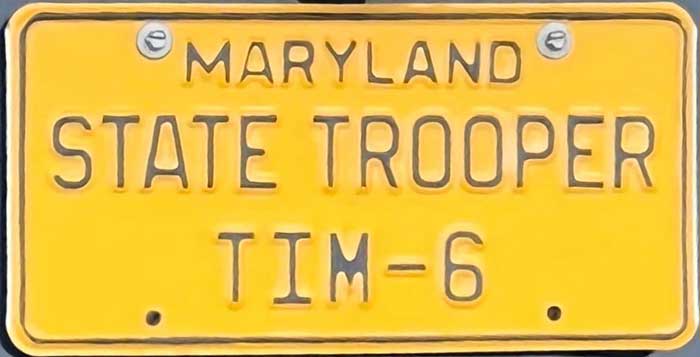 1997-Current issue. Embossed steel.
 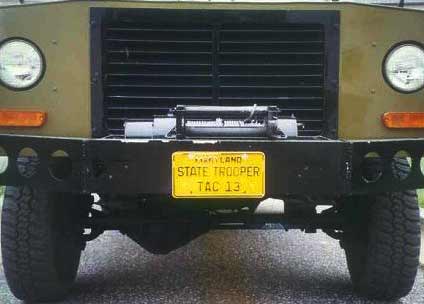 Tactical Unit Number 13
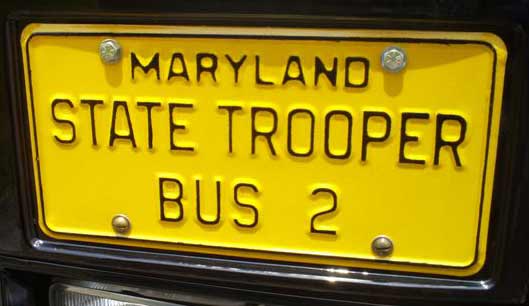 1997-Current issue. Embossed steel.
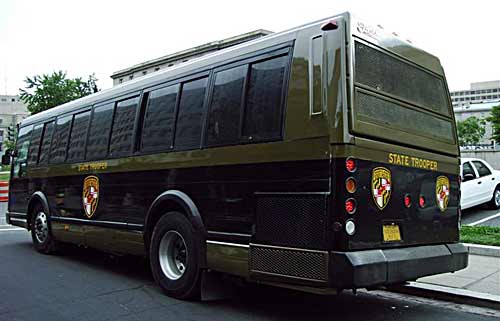 MSP Bus number 2
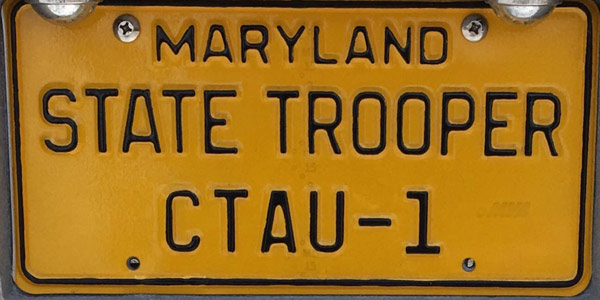 1997-Current issue. Embossed steel.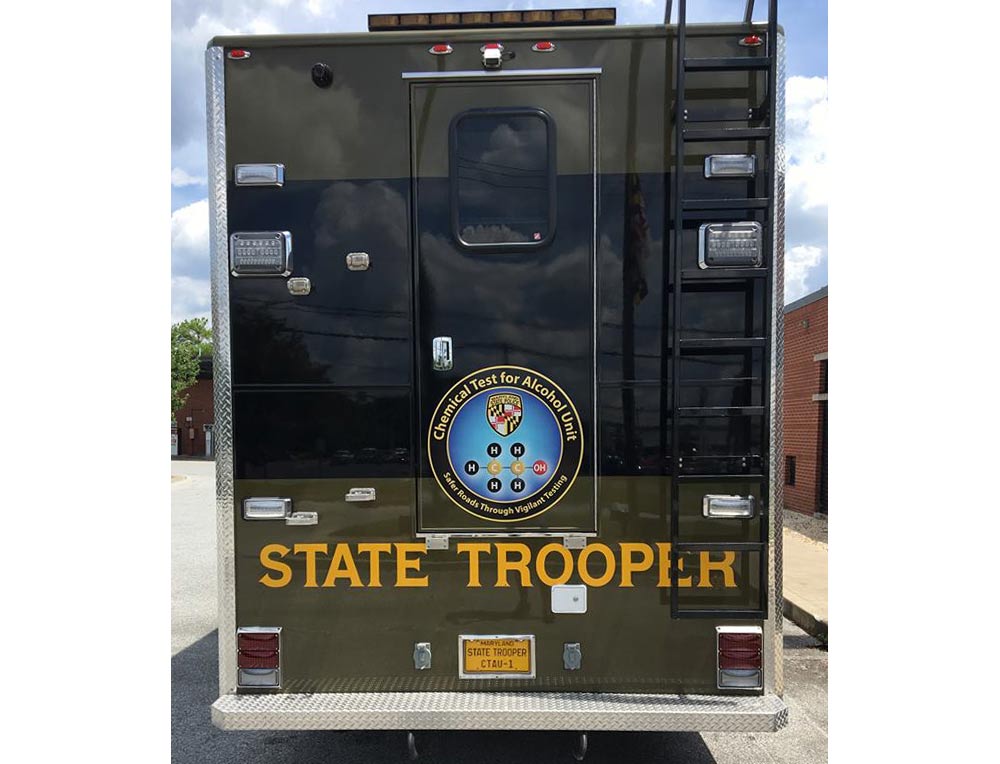
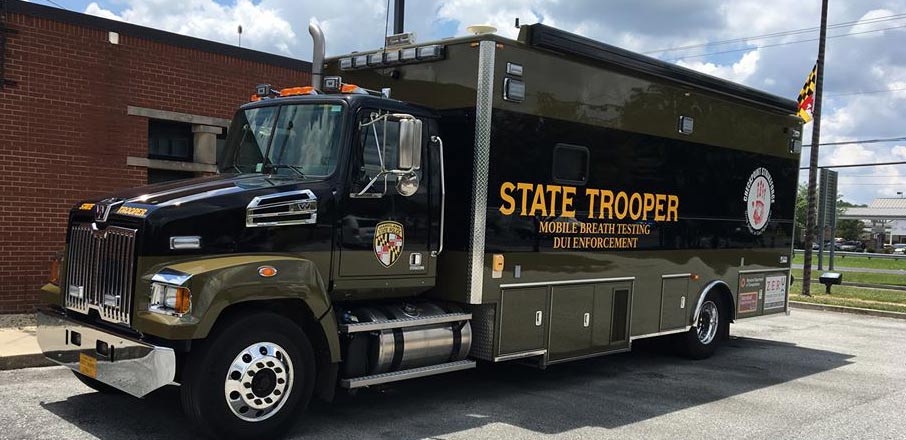 (Courtesy Jim Pilchard)
 1997-Current issue. Embossed steel.
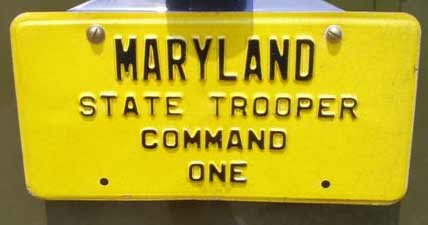
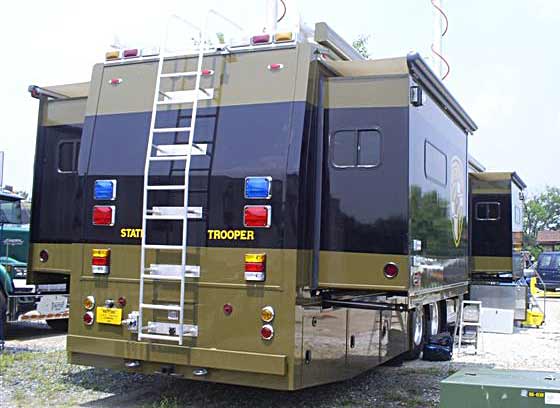 MSP Command One
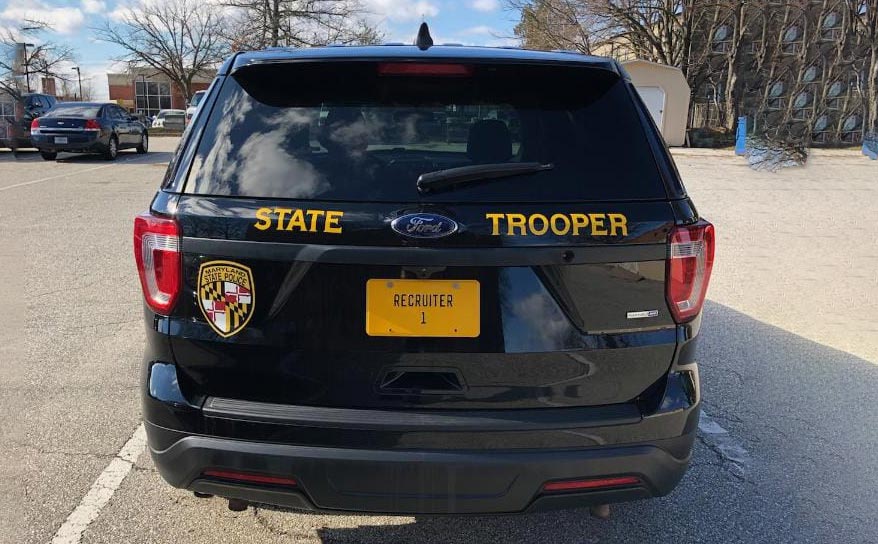 Current style RECRUITER issue.
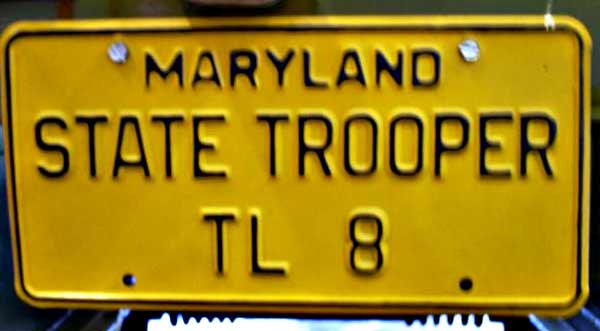 1997-Current issue. Embossed steel.
 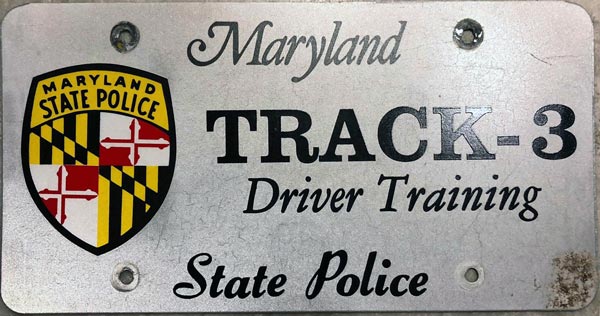 Older "patch style" Track (EVOC) issue.
 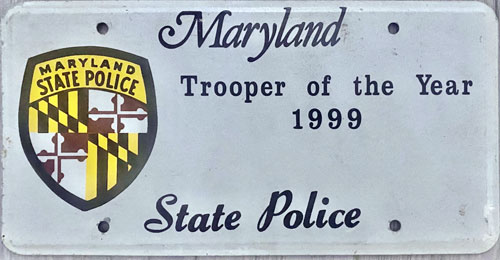 Trooper of the Year for 1999
 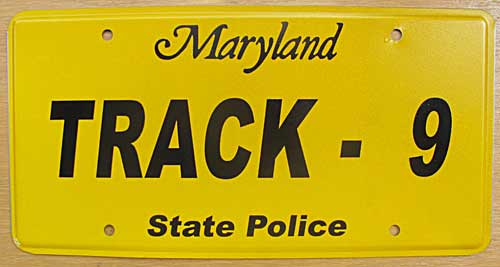 Current issue. Silkscreened steel.
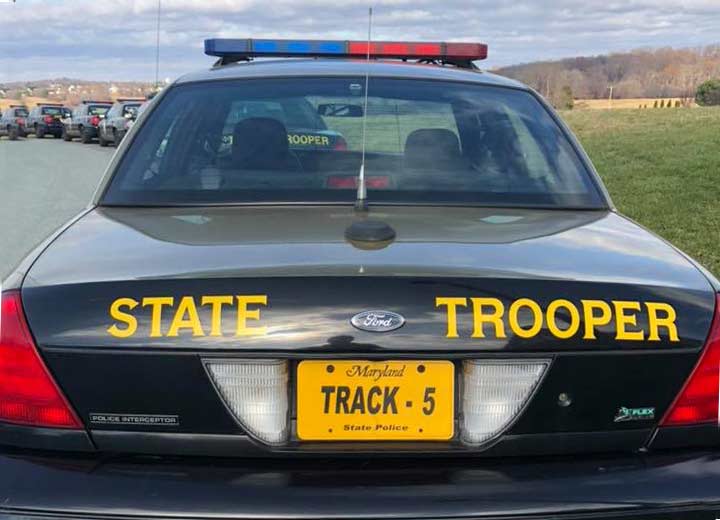 (Courtesy John Morales)
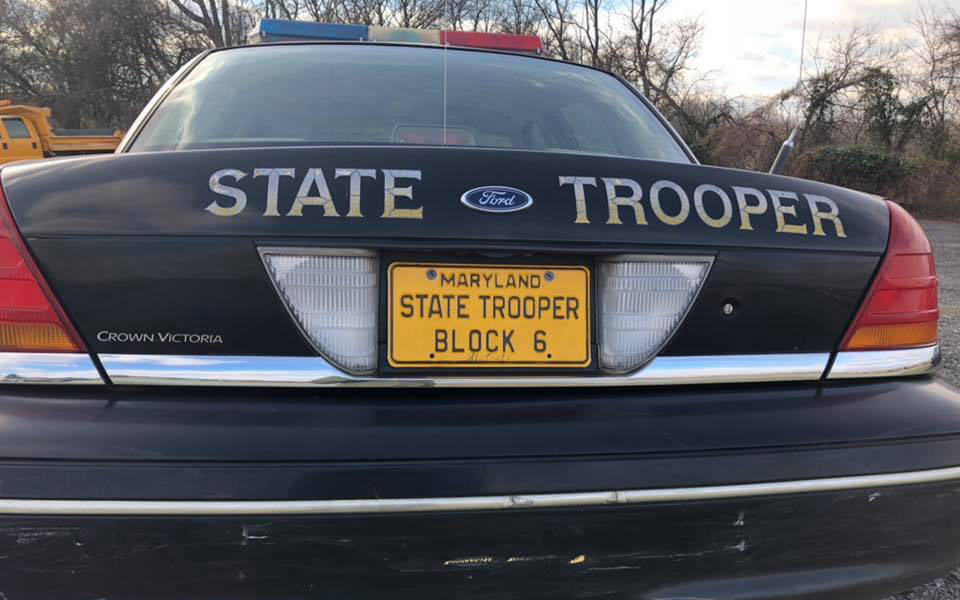 (Courtesy John Morales)
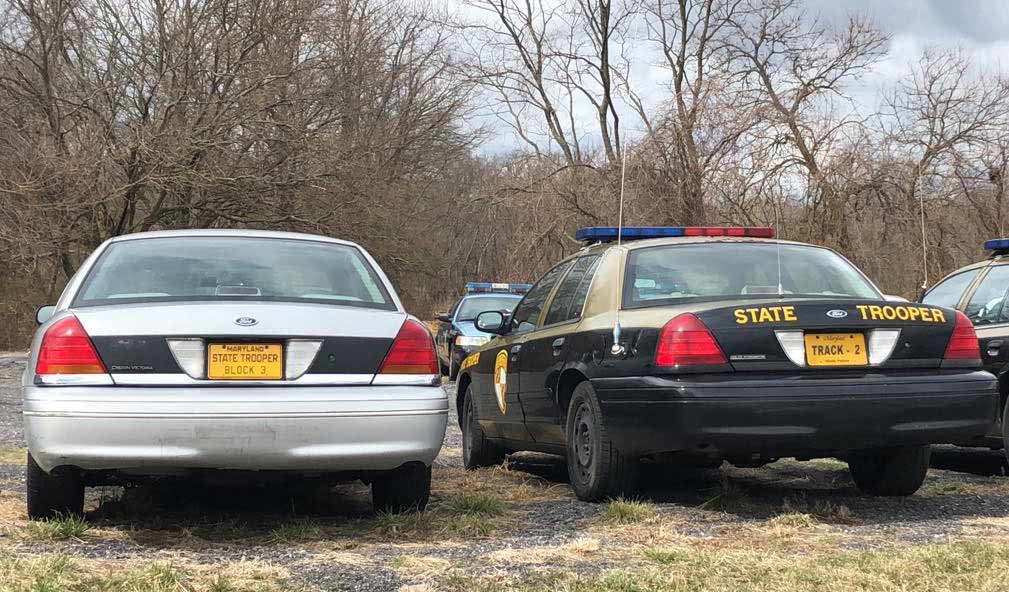 MSP "BLOCK" and "Track" issues for EVOC training.
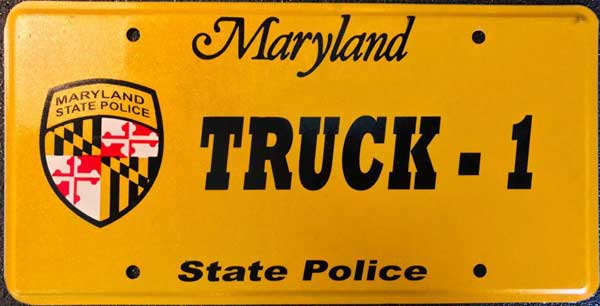 1990's-Current Truck 1 issue.
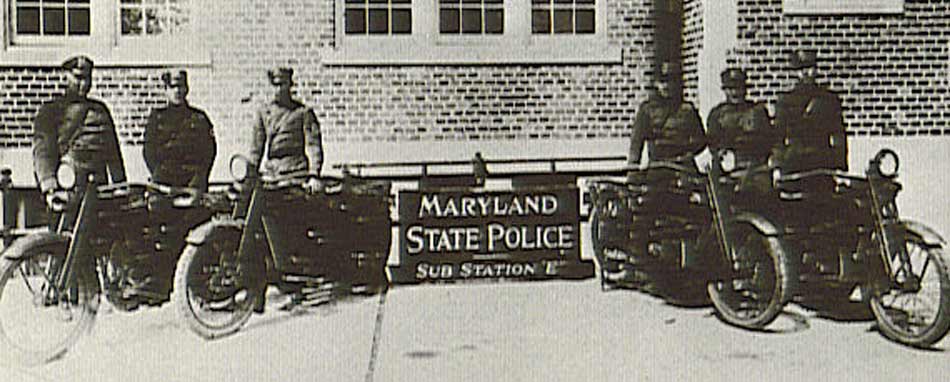
 The Maryland State Police have utilized motorcycles in their fleet fairly consistently since the days of the Commissioner of Motor Vehicles in the 1910's and into the 1920's. The archival information with respect to pre-1935 MSP/CMV license plates is thin at best. Some of the early MSP/CMV license plates were interchangeable between patrol cars and motorcycles. The "one size fits all" plates were 6" x 15" and made of embossed steel and run on the rear of the motorcycle only. The state name MARYLAND was located at the top of the plate and centered. A number prefaced by the prefix C.M.V. took up the center field of the plate. The title STATE POLICE occupied the bottom section of the plate.
A smaller-sized version of this white over red CMV plate was also utilized. It was also embossed steel and measured approximately 4 1/2" x 10".
Another smaller-sized white over red CMV version was utilized that only had the letters C.M.V. and followed by a number. There was no state name or State Police designation. It is unknown which of these types were used in which chronological order, but it could be reasonably ascertained that the plate without the STATE POLICE designation on it would be the earliest type. A lot of politics came into play during the years leading-up to the founding of the State Police officially in 1935, and there was some degree of upset that the term "state police" was being used on CMV vehicles prior to that time.
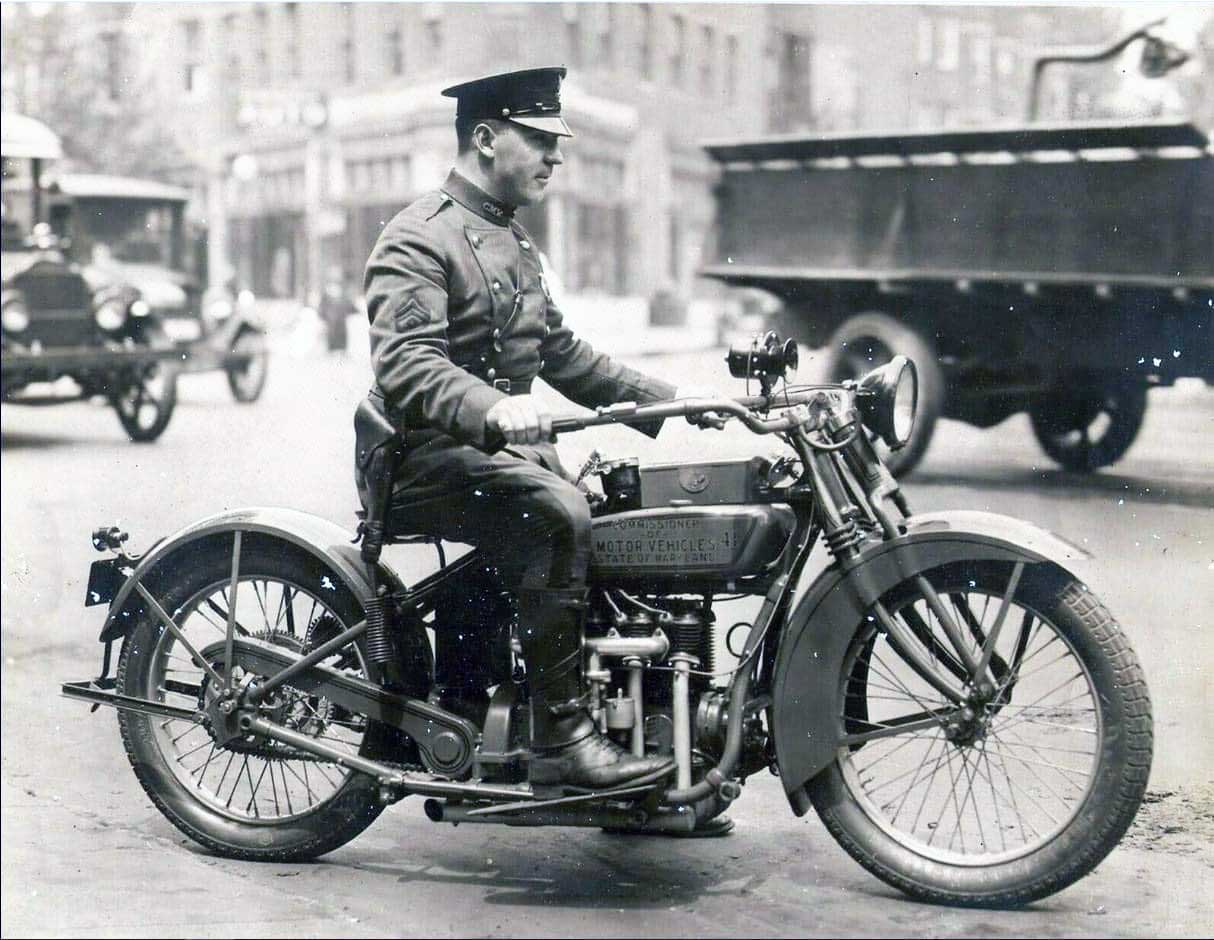 1927
1927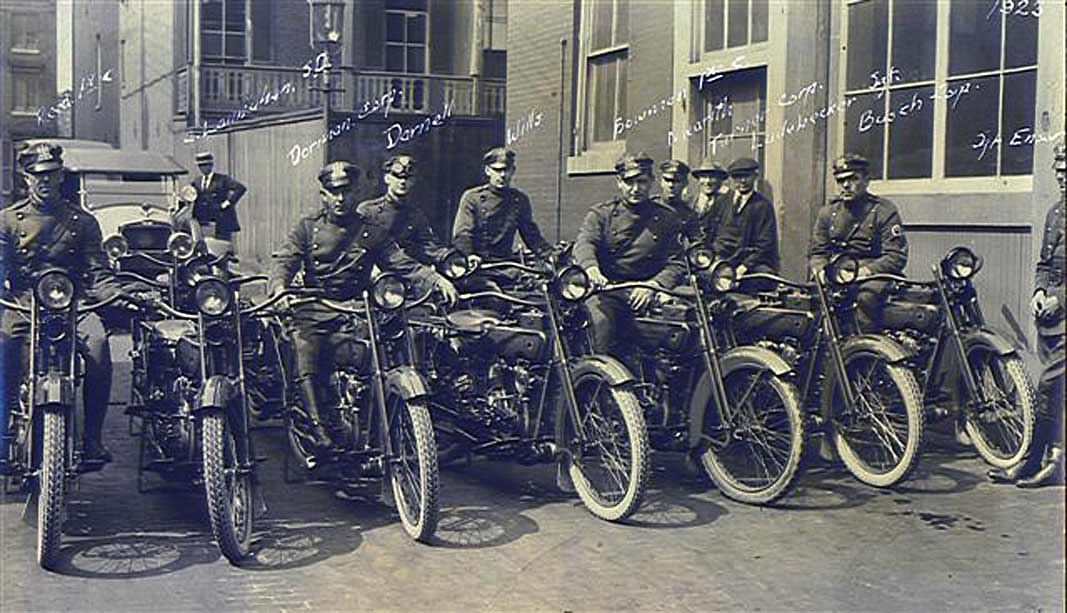
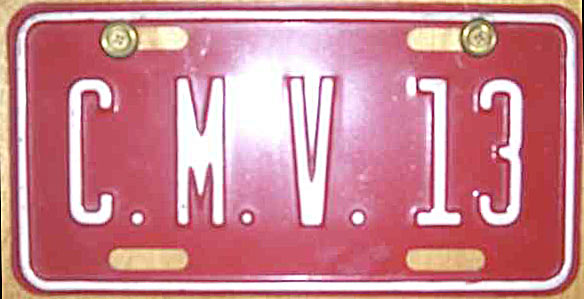 First issue motorcycle. Circa 1923 Commissioner of Motor Vehicles. Embossed steel. Approximately 4" x 10".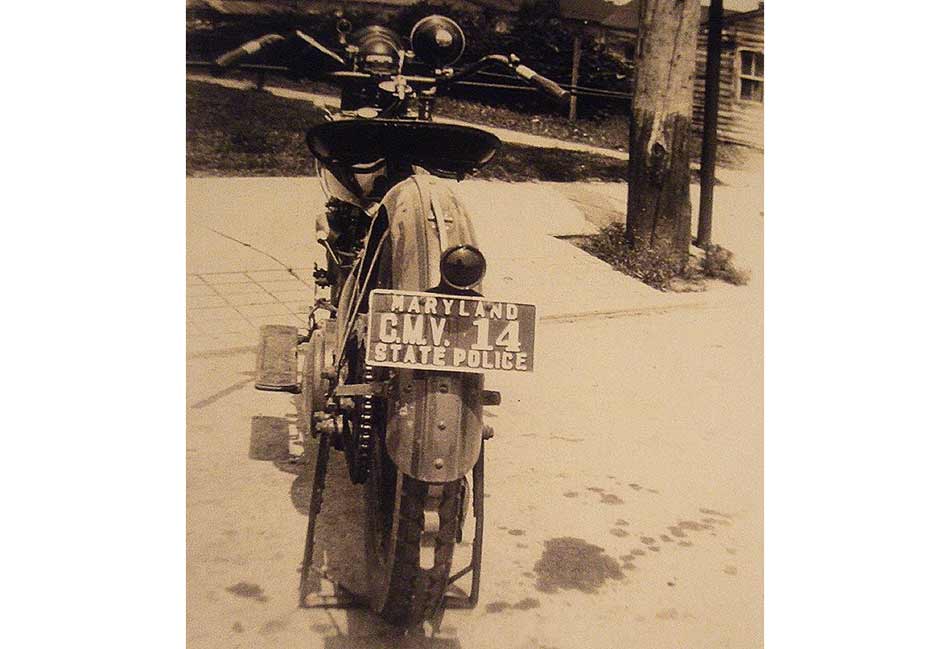
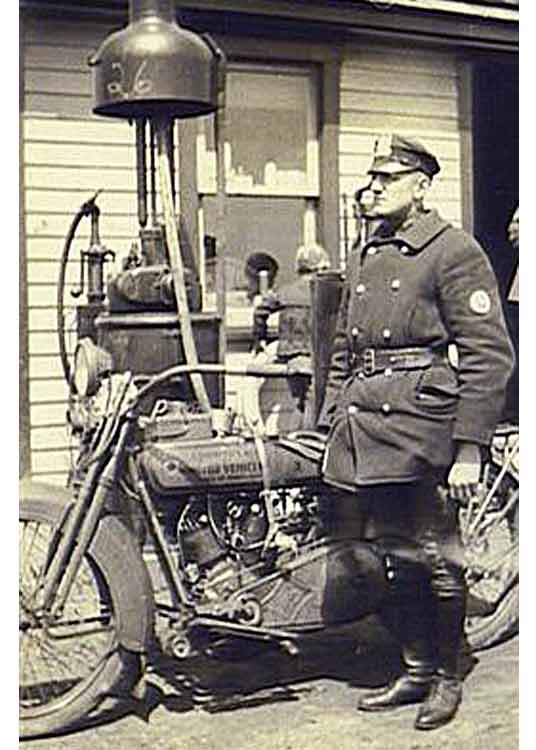 Ofc. William Lochner (1922) K
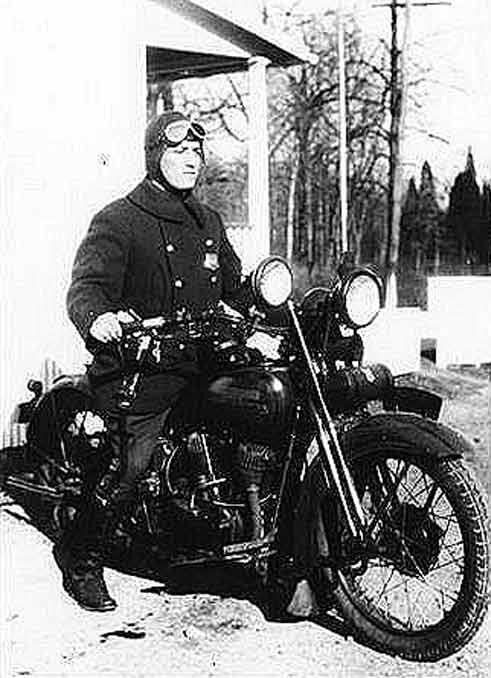 Circa 1927
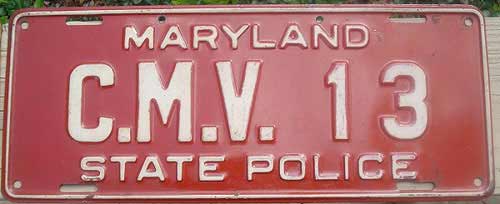 Pre-1935 issue. Commissioner of Motor Vehicles. Embossed steel. Approximately 6" x 15".
 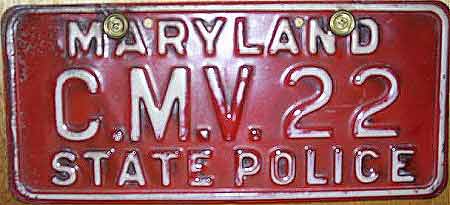 Pre-1935 issue. Commissioner of Motor Vehicles motorcycle issue. Embossed steel. Approximately 4 1/2" x 10"
 In 1935, with the official formation of the Maryland State Police, smaller-sized versions of the black over yellow-orange MSP car license plates were made for the fleet of MSP motors. These plates measured also approximately 4 1/2" x 10" and were made of embossed steel. The title MARYLAND over STATE over POLICE occupied the entire left and center portion of the plate which was followed by a number up to 3 digits. These plates were run rear only and were run right up until at least 1956 with only minor variations in construction.
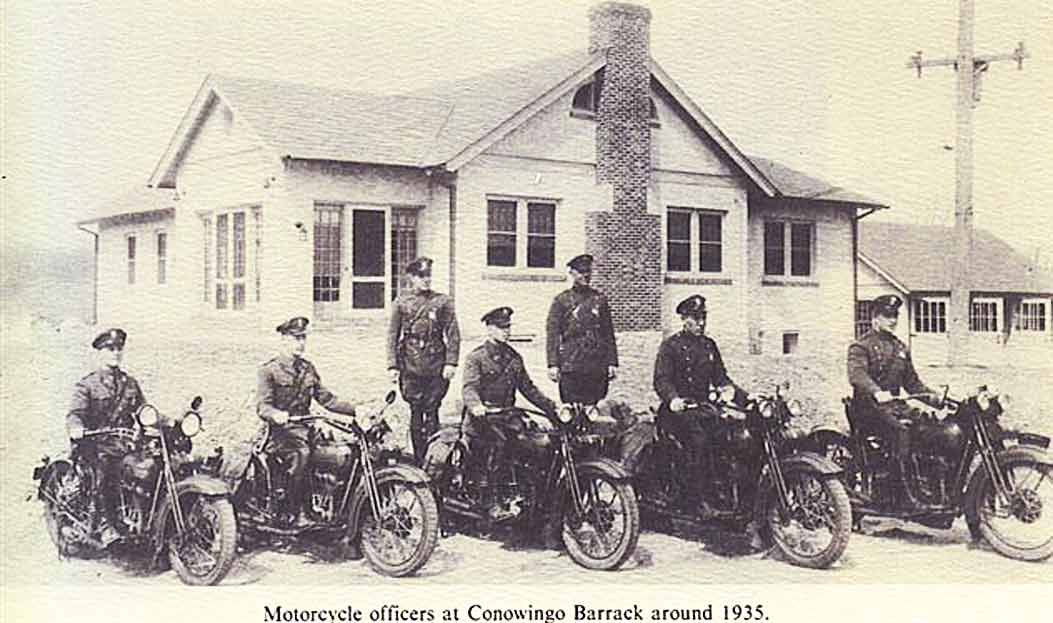
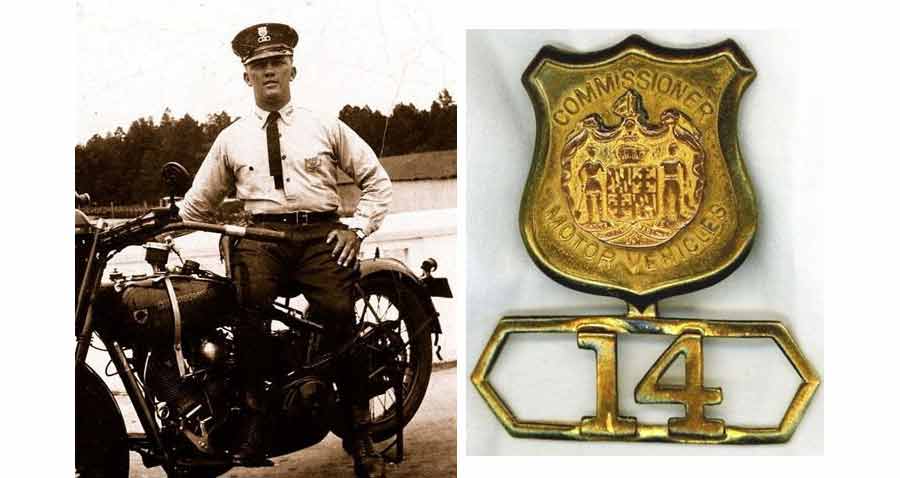
The photo above shows a young CMV Officer Menasha Katz, badge number 14 posing for the camera back in the late 1920's/early 1930's. OFC Katz went on to become a Maryland State Police officer when the amalgamation took place in 1935. He took pride in his career and affiliation to Maryland's Finest, and secured the first Maryland State Police motorcycle license number one at that time. He later began requesting number 100 for all his subsequent license plates for the remainder of his career and was smart enough to have kept his MSP license plates and other MSP/CMV memorabilia where they can be seen throughout this page. Menasha Katz's MSP/CMV collectibles remained with his family long after his passing, and his estate made these items available for new owners back in the early 2000's.
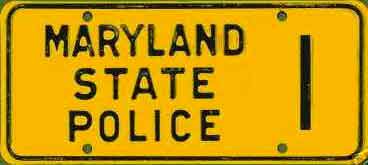 1935-c.1957 issue motorcycle. Embossed steel.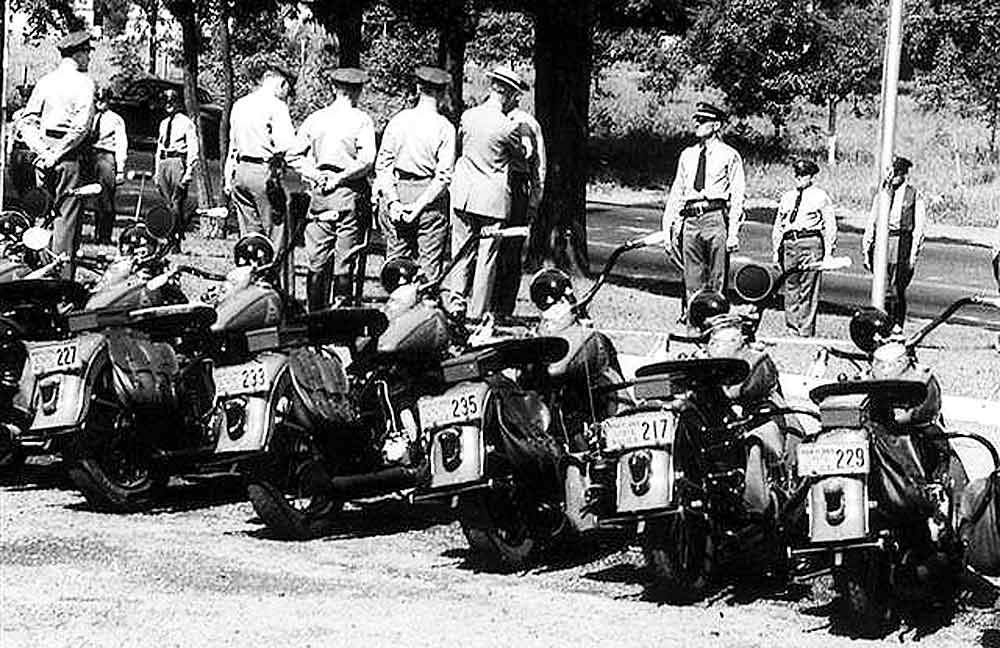
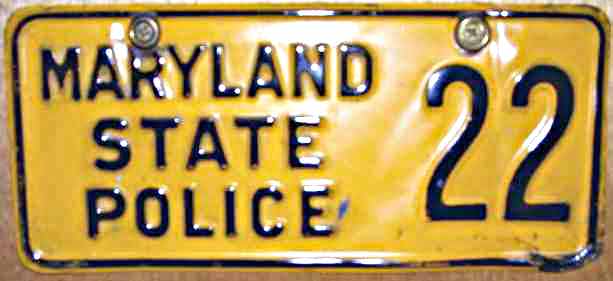 1935-c.1957 issue motorcycle. Embossed steel.
 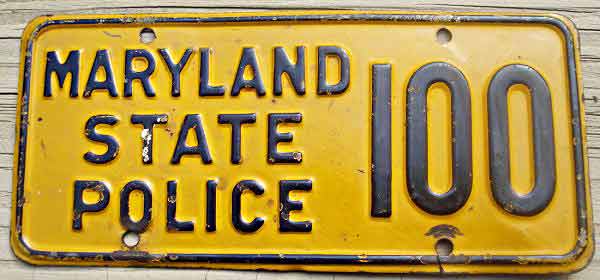 1935-c.1957 issue motorcycle. Embossed steel.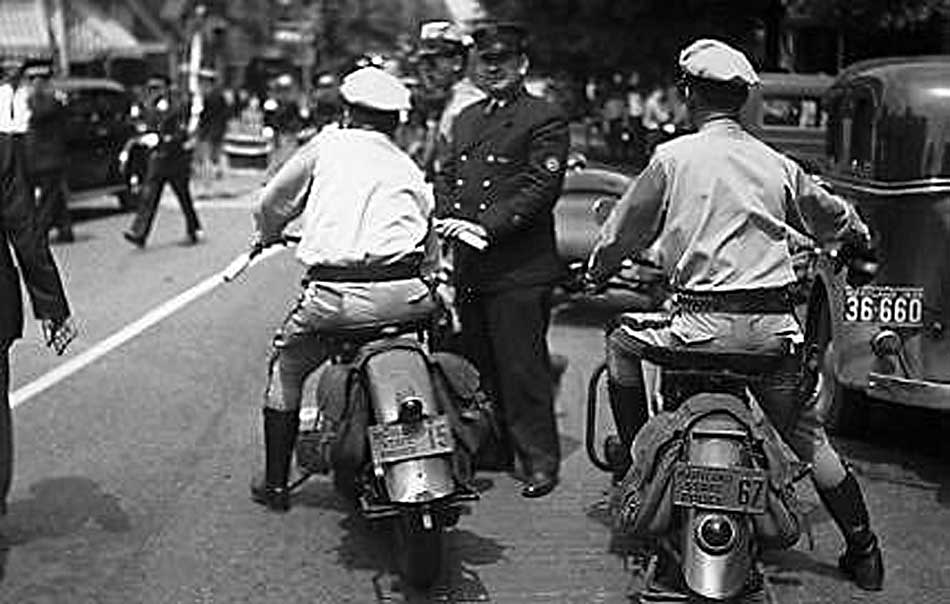
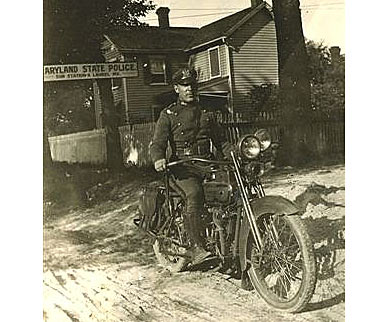
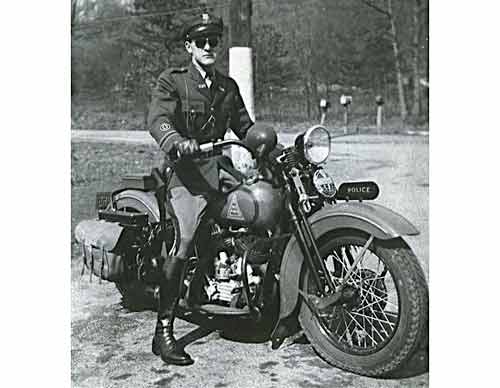
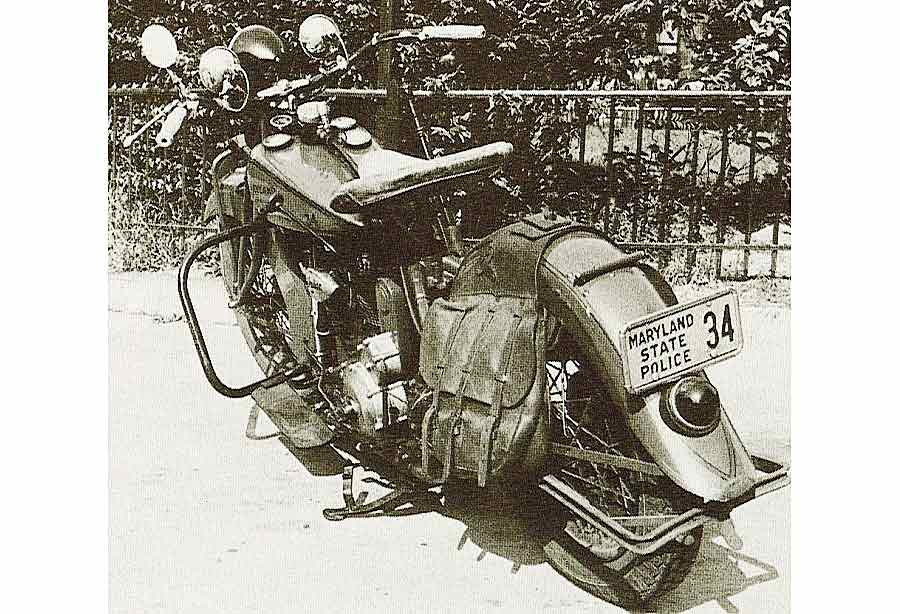
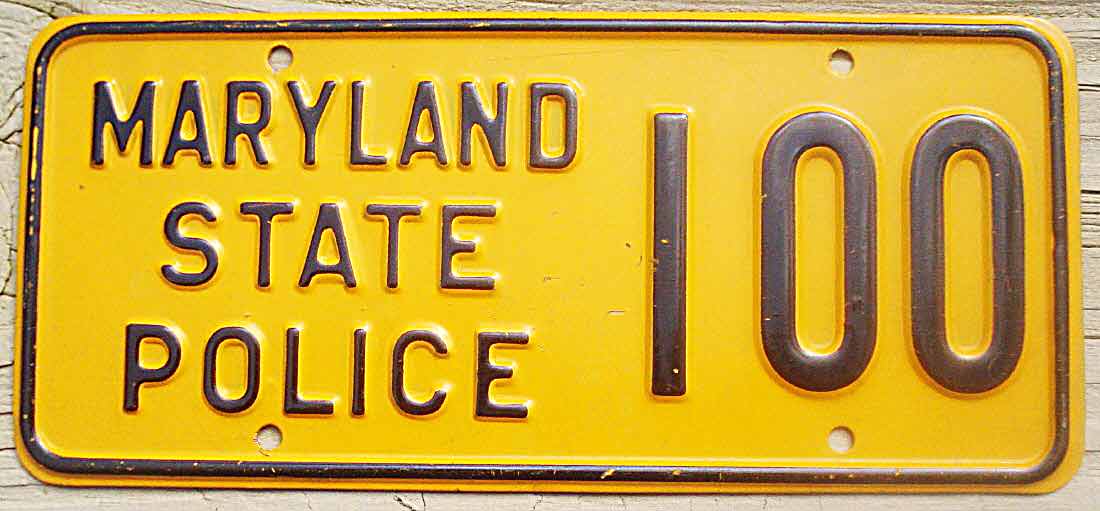
The 4 1/2" x 10" titled MSP motorcycle license plates continued to be used as the number of motorcycles in the fleet dwindled from the late 1950's and into the 1960's. It is not known exactly when it was introduced, but likely in the mid 1960's when a smaller and subdued-looking version was introduced.
The new plates measured 4 1/2" x 10" and made of embossed steel. The color scheme was still black over yellow-orange with an embossed black border. There were two oblong mounting slots at the top corners of the plate and two smaller round mounting towards the middle center of the bottom of the plate. A number up to three digits occupied the center field of the plate with MD. embossed between the lower mounting holes. A validation decal "navel" was embossed in the lower right corner of the plate, however decals were never affixed.
These plates continued in use as the MSP motorcycle fleet continued to diminish by the 1970's.
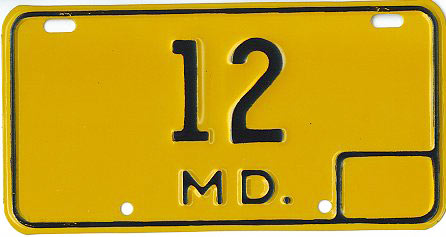 Early 1980's motorcycle issue. Embossed Steel.
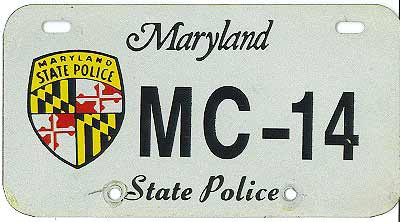
 When MSP reintroduced motorcycles to the patrol fleet in 1984/1985, the license plates used were smaller versions of the design used for MSP car plates.
The plates were flat steel and consisted of a reflective white background with black characters. The state name occupied the top portion of the plate in stylized script.The MSP emblem appeared in full color on the left side of the plate followed by the prefix MC, a dash and a number up to two digits. The title State Police occupied the lower portion of the plate in black stylized script.
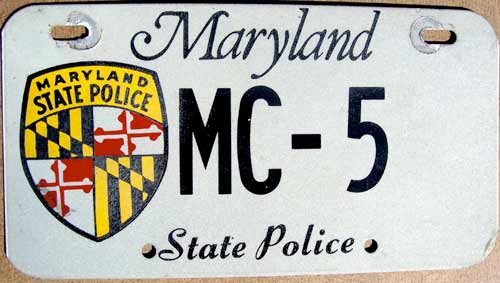 1985-1996 motorcycle issue. Silkscreened steel.
 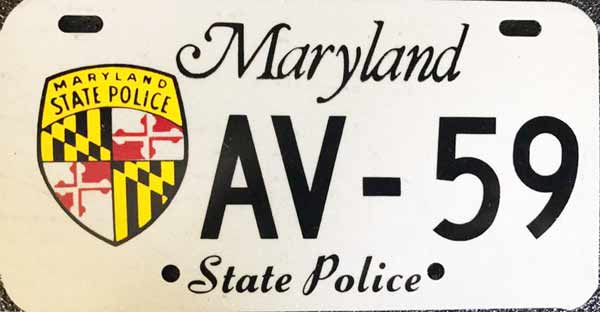 1985-1996 motorcycle issue. Silkscreened steel.
 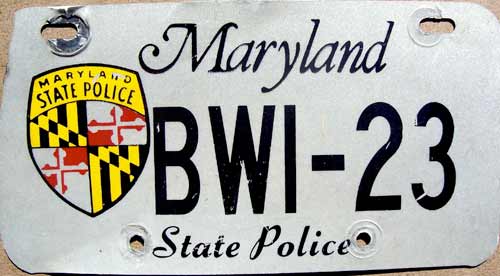 1985-1996 motorcycle issue. Silkscreened steel.
  1985-1996 motorcycle issue. Silkscreened steel.
  1985-1996 motorcycle issue. Silkscreened steel.
 It is not known exactly when, but it is believed to have been in the early 1990's when the motorcycle license plates of the MSP had to be numbered in the 700 series. The MC and BWI prefixes for MSP motorcycle plates were dropped for the remainder of this series.
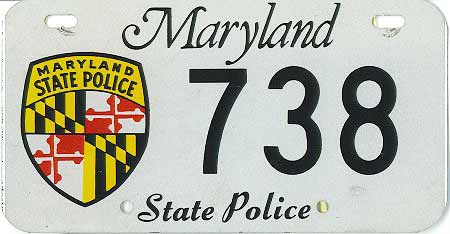 1985-1996 motorcycle issue. Silkscreened steel.
 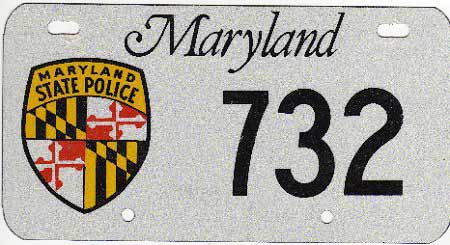 1985-1996 motorcycle issue. Silkscreened steel.
 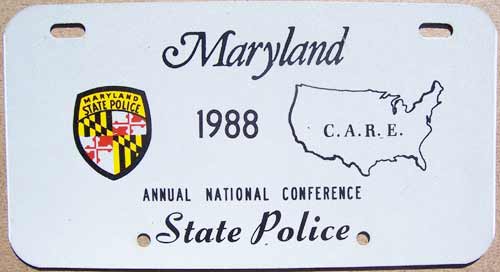 1988 CARE National Conference Souvenir motorcycle plate.
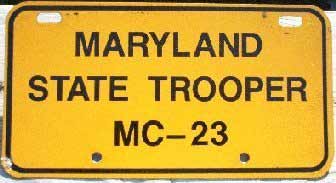
 When the MSP went back to the traditional olive and black livery of the fleet in 1995, they also returned to the old color scheme for the license plates of that era: black over yellow-orange. Motorcycle license plates were no exception, however this time all the characters on the steel plate were silkscreened and not embossed.
The plates had a black border with MARYLAND screened over STATE TROOPER over the prefix MC followed by a dash and the number.
These plates continue to be used on Maryland State Police motorcycles to this day.
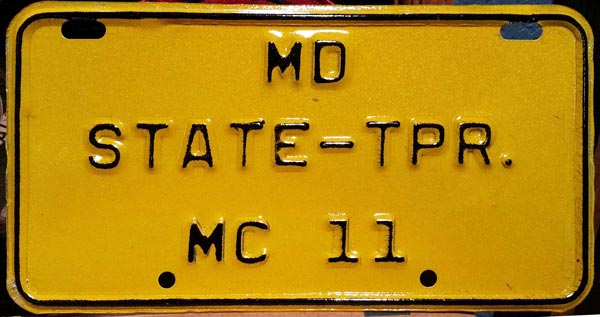 Early 2000's motorcycle issue. Embossed aluminum.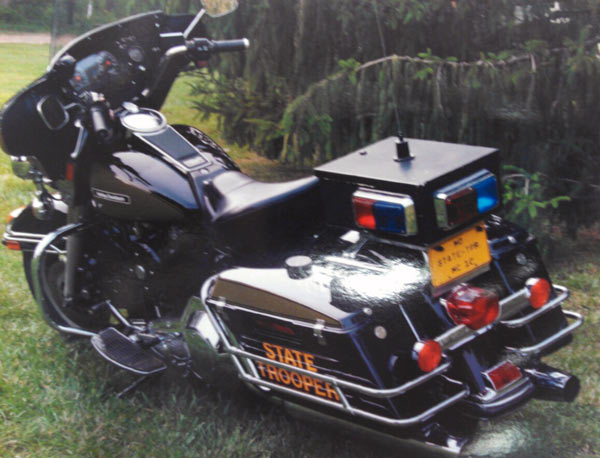
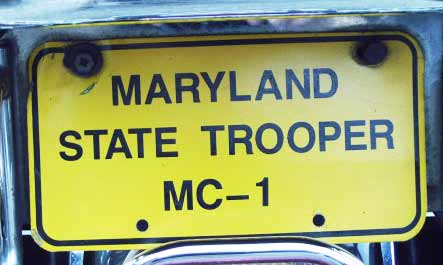 1995-Current motorcycle issue. Silkscreened steel.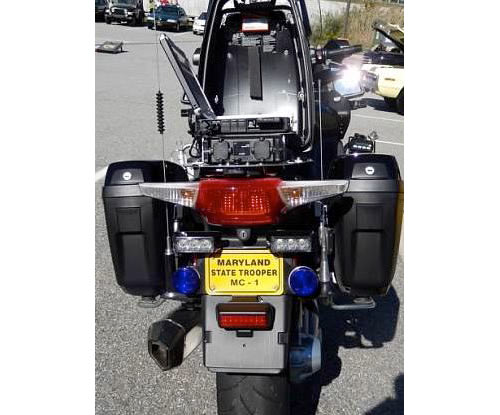
 1995-Current motorcycle issue. Silkscreened steel.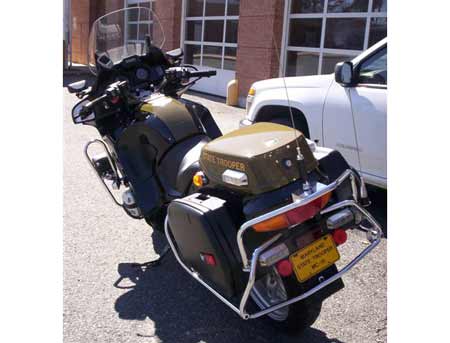
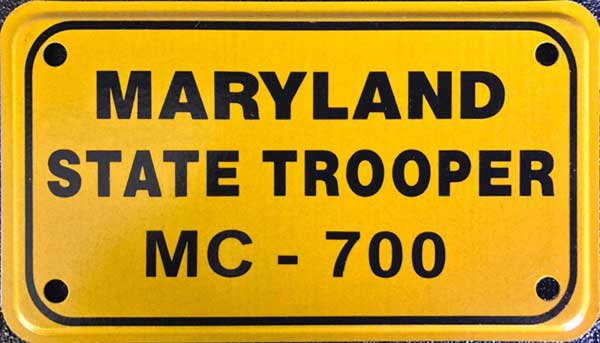 Late 1990's-Early 2000's prototype for motorcycles.
 Throughout the years. the Maryland State Police also issued small dashboard license plates for MSP personnel on official business in unmarked cars. As can be seen, they varied in size, format, material and layout.
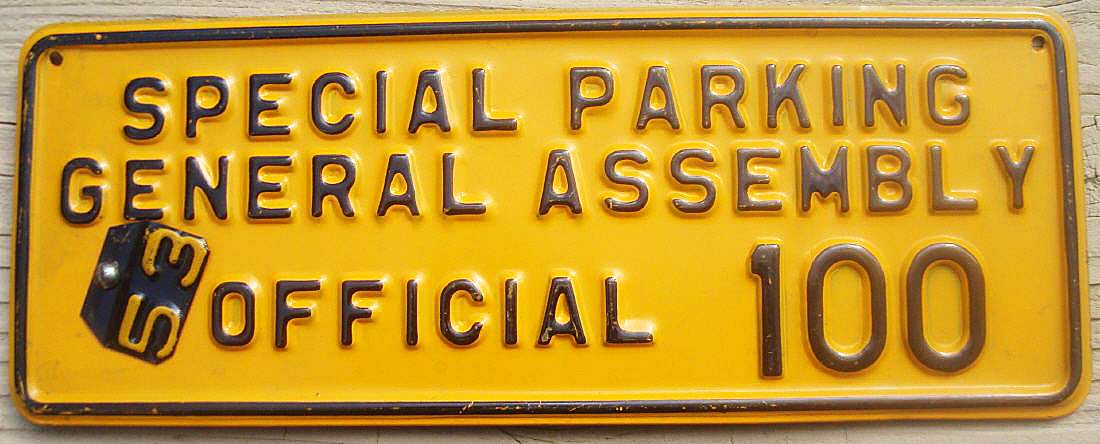
This embossed steel Special Parking dash plate issued for 1953 is in the contemporary color scheme of the MSP license plates of the day. The plate measures approximately 3" x 11", and by the telltale number 100, was issued to MSP Trooper Menasha Katz for prime parking at the Maryland General Assembly as he had been the assigned driver for the MSP Superintendent of that era. (Courtesy Jon Olivarri)
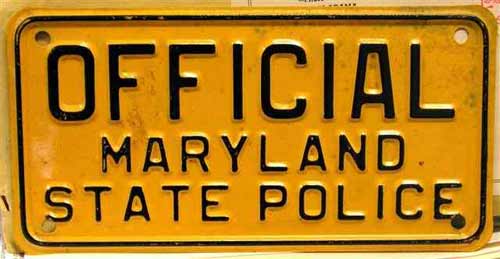 Circa 1960's dash plate.
 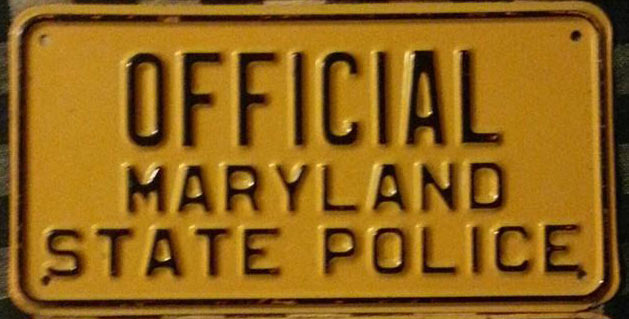 Circa 1960's dash plate.
 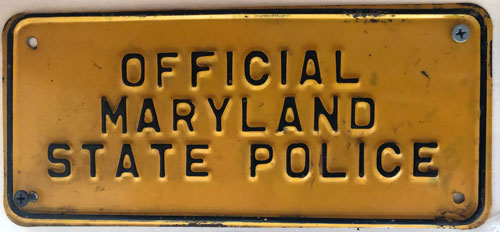 Circa 1960's dash plate.
 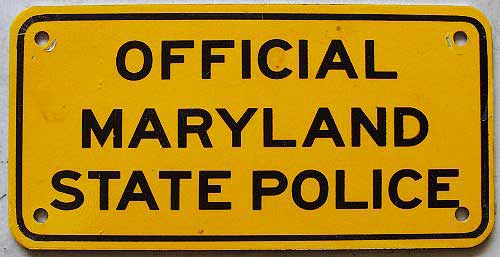 Circa 1970's (?) dash plate.
 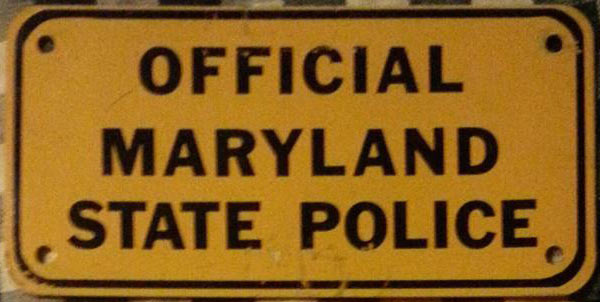 Circa 1980's (?) dash plate.
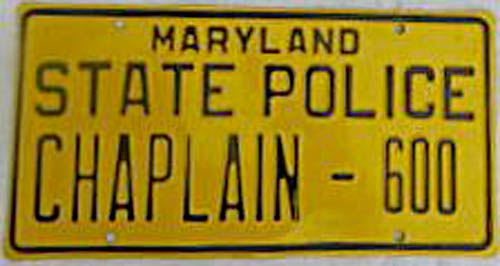
 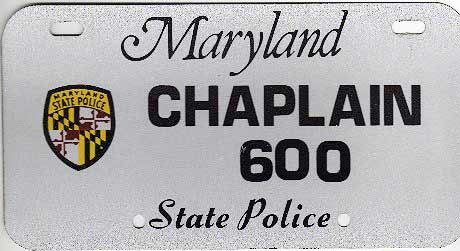 1985-1996 Chaplain dash plate. Silkscreened steel and measures approximately 4" x 8".
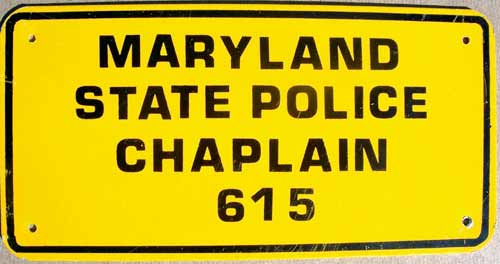 Circa 1990's Chaplain dash plate. Silkscreened steel and measures approximately 4" x 8".
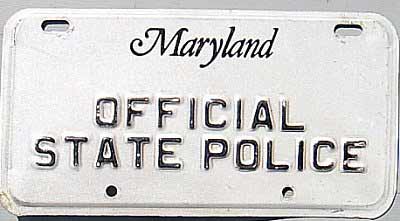 1985-1996 dash plate. Embossed steel and measures approximately 4" x 8".
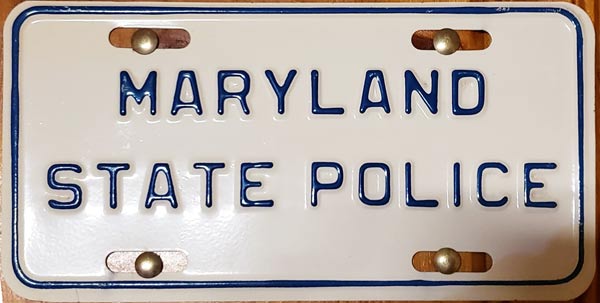 Older style dash plate.
 There are some special issue license plates that are not issued by or officially used by the Maryland State Police, but are attributed to the agency all the same.
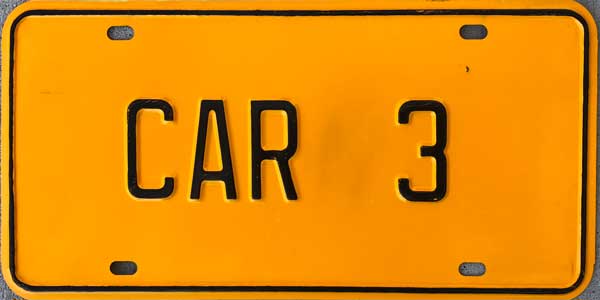 1960's/70's era. Embossed steel.
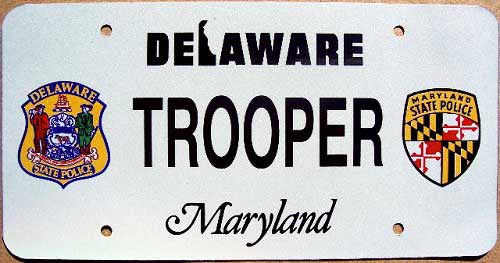 National Trooper's Coalition Conference souvenir license plate. This conference was co-hosted by Delaware State Police. Exact year not known. Silkscreened steel.
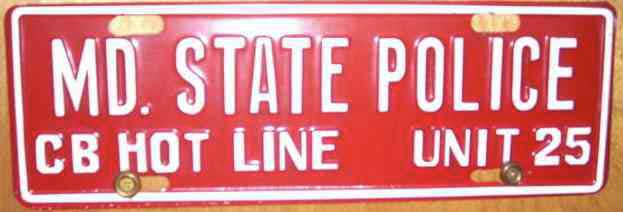 Circa 1970's. Embossed steel. Approximately 4" x 12". Used as attachment on license plate of civilian cars with citizen's band radios to advise MSP of disabled motorists or other highway emergencies. Almost along the lines of a communications posse.
 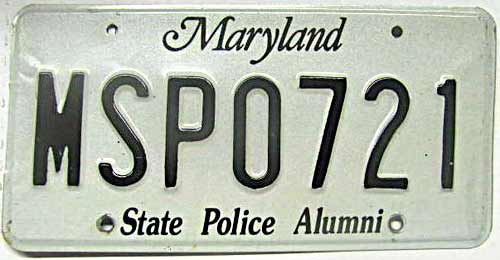 Circa 1990's State Police Alumni issue.
 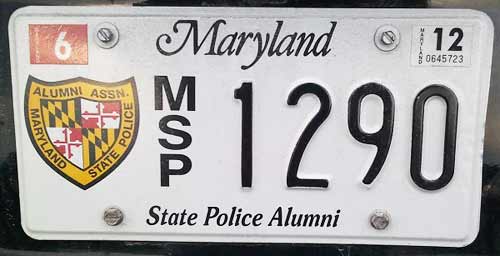 Circa 2012 State Police Alumni issue.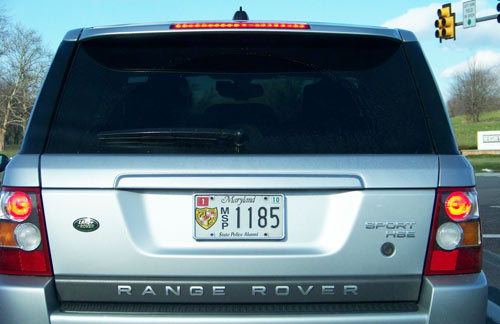
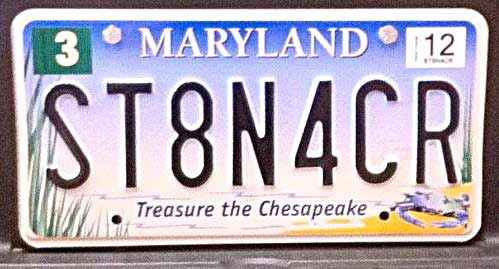 Personalized vanity license plate of MSP Trooper
 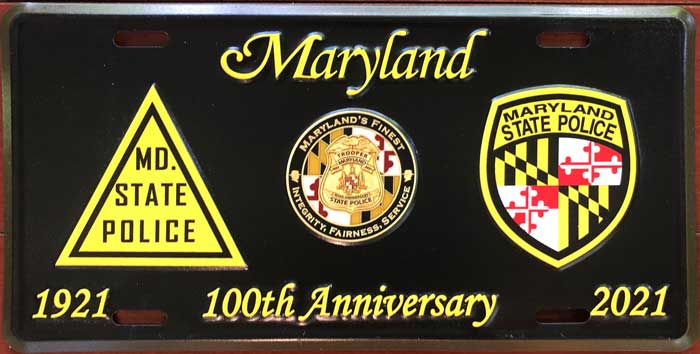 100th Anniversary Souvenir plate.
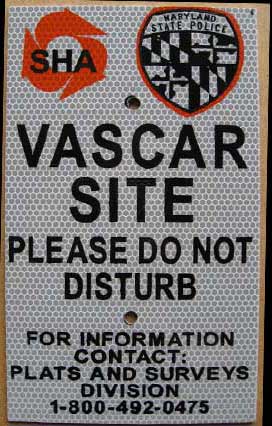 Sign placed and maintained by maryland sp and state highway administration for VASCAR site marking
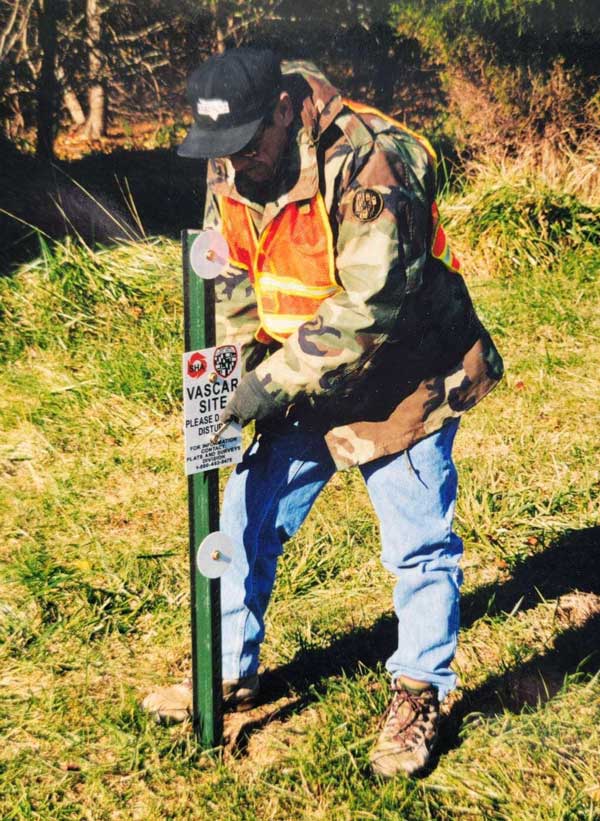 The late, great James "Whitey" Grubb installing VASCAR sign.
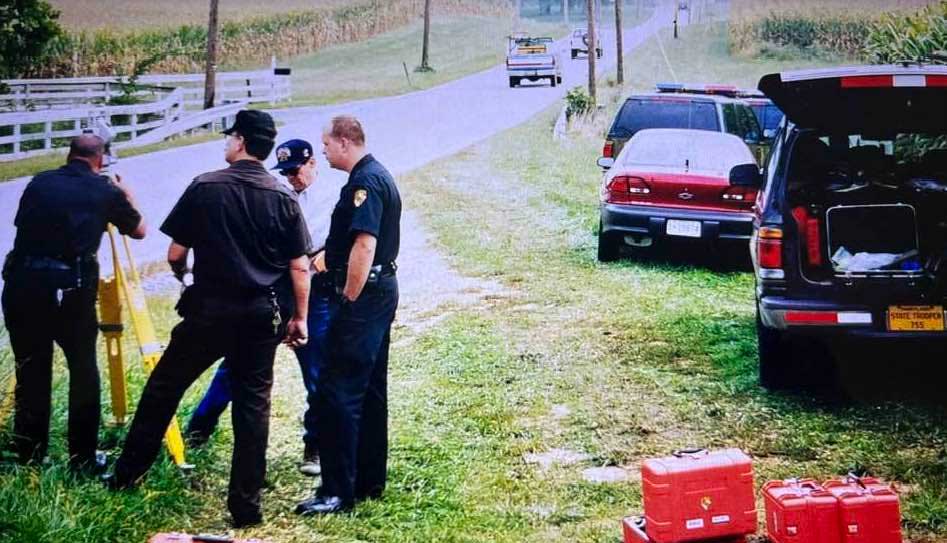 Honing-in on VASCAR assessment with James Grubb in sunglasses.